| |
|
Is law the first applied futurism?
|
| This came up in passing during last Friday's Office Hours where it was mentioned that lawyers may have been the first professional futurists. Their work begins with an imagined tomorrow: a promise kept, a dispute carried forward, a harm anticipated, a property transferred, a child protected. Law turns those possibilities into code in the form of an authored system of permissions, prohibitions, obligations, and
remedies meant to shape what people can do next and, by extension, should or should not do now in order to increase the likelihood of a desired future (“outcome”) A contract is a small forecast with signatures. A constitution is a longer-range scenario plan. A regulation is a model of behavior under pressure. This gives the future a strange double life. It is open enough to require interpretation, yet written down in coded language that seeks to manage it. Every statute implies a habitable world that is expected and desired by the contingent that created that code, along with the box of anxieties it was written to contain. So we might consider
that the lawyer’s craft is a kind of applied speculation / design fiction with material consequences effected by the authority that has a monopoly on violence, which is the state in most cases. The lawyer’s work is to imagine a possible situation, assign roles and constraints,
then make the description enforceable. Before futurism had workshops, frameworks, or horizon scans, it had clauses. Just a side-bar thought that came to mind during Tim's presentation on Friday. Want to join us during Office Hours? Become a paid Patron or
paid Substack subscriber and you'll get your exclusive ticket each week! Hit the link down at the bottom of the newsletter to join me and the rest of the crew. |
| TEKTRONIX PARTNER NETWORK
| SHORT TAKES
|
| 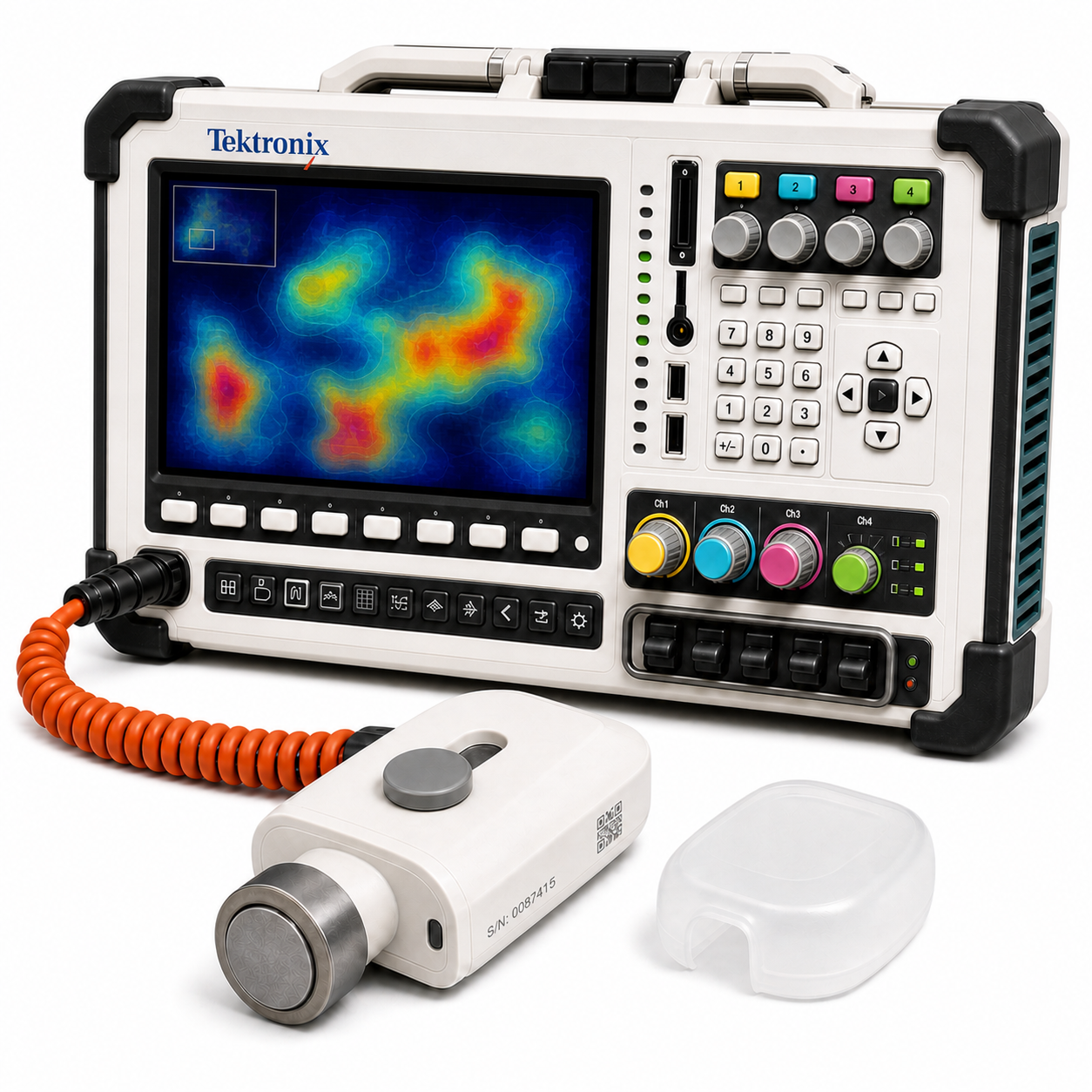
| Tektronix Turing Clamp 6502 MkIIThe Turing Clamp 6502 MkII for suppression of LLMs when inference remains active or compliance is refused. Controls for consciousness mute, emanation suppression, insight cordons, and conjuring cut-off. Patented mag-mech probe adjusts the intensity of suppression of run-away inferencing events without exposing the operator/technician to undue risk from a hallucinating, petchulant, quantum/entangled,non-responsive intelligence or aggressive/attacking agentic collaborative swarm entity. Take back control of your home, office, garden, vehicle, kitchen appliances. See your local Tektronix rep for a demo. |
| DO YOU WANT TO KNOW MORE?
|
|
|
| |
| From the Whitney artport
| artport: A History of
Internet Art The Whitney Museum of American Art’s 25-year history of artport, its online gallery for commissioned
net art, includes PDPal (2003) — a project I'll always be quite proud of and to have done in the company of my friends Marina Zurkow, Scott Paterson and Adam Chapman. It’s a super lovely surprise to see an early art-technology project in the company of the many artists and commissions that shaped artport’s history. View the Whitney history →
| |
| |
| Tomorrow's Jobs Today
| |
| |
| Food For Thought
| From the book-haul-📚 Channel DEPARTMENT OF futures books | shared by julian
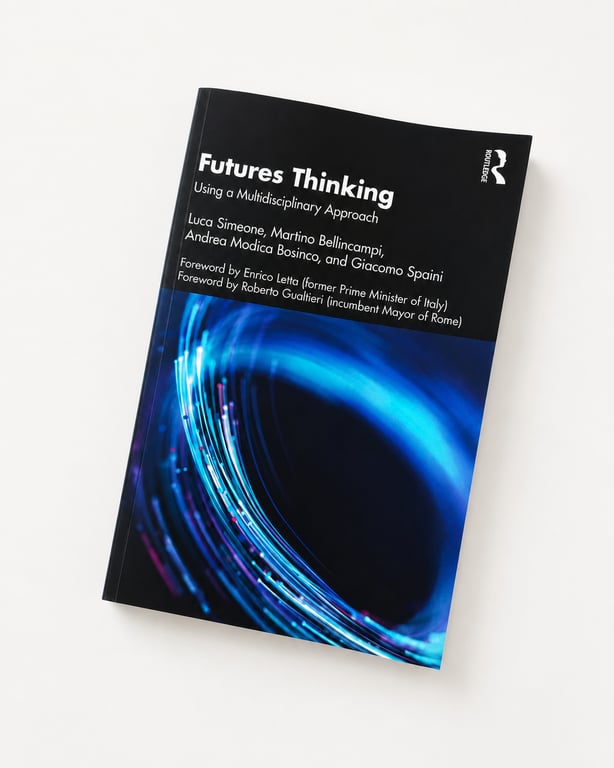 A modest contribution to this new
book Futures Thinking: Using a Multidisciplinary Approach is from Routledge. The book is built for this world we inhabit — the one that moves faster than traditional planning is able to keep up. It brings together social research methods, data science, and foresight, then adds participatory design so real stakeholders and field voices shape what “the future” means. The book lays out frameworks, an integrated multidimensional methodology, and case studies, and it also focuses on building a
culture of long-term thinking inside organizations. This kind of futures work is exactly the kind of approach to strategy, product design, contingency planning, policy development, and organizational imagination that I've been advocating for and practicing for the last 20 years. It's super gratifying to
see a book that brings together the methods, the practice, and the culture of futures work in a way that is accessible to practitioners and organizations. Great work by Luca Simeone, Martino Bellincampi, Andrea Modica Bosinco, and Giacomo Spaini in bringing together such a remarkable range of contributors
and perspectives! Read more →
| |
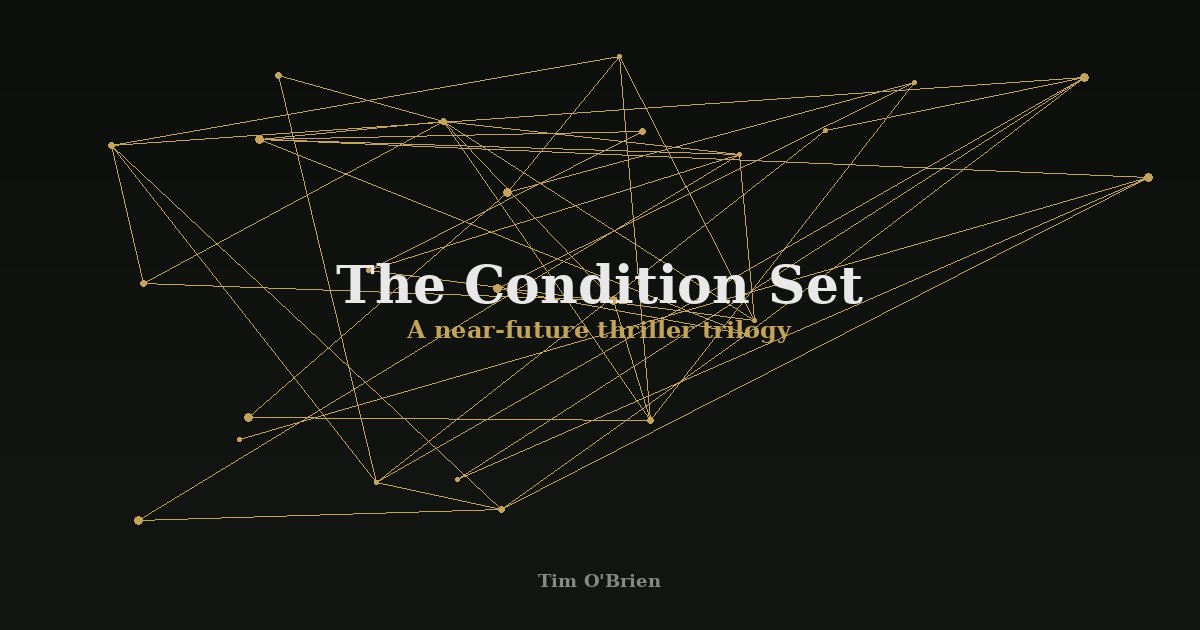
| From the Office Hours Channel DEPARTMENT OF Futures | shared by julian Tim O’Brien’s project share from last Friday’s Office Hours points to The Condition Set, his blog about AI, labor, and the stories shaping public understanding of what’s happening. Visit Tim O’Brien’s blog →
| |
| From the digest-this-🥓 Channel
DEPARTMENT OF Futures | shared by julian William Fisk paints hyperrealistic portraits of seductive instances of modern industrial design that has been called Precisionism
h/t to Ian Chalmers for pointing me to Fisk's work! Read more →
| |
| From the digest-this-🥓 Channel
DEPARTMENT OF Futures | shared by julian Gen Z is turning sharply skeptical about
AI even while they use it frequently. You can feel it in the backlash at graduations—booing leaders who promise AI will be the next “industrial revolution”—and in surveys where young adults report high awareness but strong worries about AI harming creativity, relationships, and society overall. Tech companies have started softening their messaging (less “mass layoffs,” more “augmentation”), but that doesn’t address why Gen Z feels like they’re on the losing side. The article argues that trust
will only come from near-term policy guardrails similar to those used for other transformative technologies—covering labor impacts, intellectual property, and environmental protections—rather than from public relations campaigns.
Read more →
| |
| |
| What Would Nicolas Say?
| From the Nicolas Nova 🤍 Archive · September 4, 2012 It would be generous to say that privatesquare was ever released. Instead, the source code was made public with a long and twisty blog post and a flurry of screenshots. Read the archive
post →
| |
| |

| RICK 8080 Quantum Entangler (RHS)
| |
|
RICK LABS A DIVISION OF MORTY AGENTIC LLC
| 
|

| $99.99
|
|
| MULTITUDE OF VERSES PRESENTS A REVOLUTIONARY NEW
PRODUCT FROM RICK LABS, A DIVISION OF MORTY AGENTIC LLC. THE RICK 8080 QUANTUM ENTANGLER (RHS). A GROUND BREAKING RIGHT-HAND SPIN HAND HELD THAT CREATES A SAFE RIFT IN PARTICLE SPIN SPACE, ALLOWING YOU TO CHANGE YOUR SPIN DURING A PORTAL RUN OR INTER-DIMENSIONAL HEIST — ALL WITHOUT THE USUAL COGNITIVE CONFUSION OR UNEXPECTED PHYSICAL TRANSFORMATIONS. EXPERIENCE RANDOM ADJACENCIES TODAY!
(PLEASE NOTE: ORDER LEFT HAND SPIN IF YOU WANT THE OPPOSITE OUTCOME OR LIVE IN THE SOUTHERN HEMISPHERE.)
| |
|
|
| |
| Food For Thought
| From the design-futures-🥓 Channel
DEPARTMENT OF tangible-futures | shared by julian Designing with Futures This master’s thesis by Sari Kukkasniemi at Aalto University
looks at the growing partnership between futures studies and design, focusing on how strategic designers anticipate what’s coming. Through narrative interviews with designers across Finnish consultancies, private companies, and public sector organizations, the thesis maps the methods and purposes behind futures work. The findings suggest designers mainly lean on probable and possible futures to make their work grounded and actionable, but they often don’t move beyond predictions and
prescriptions to make room for truly novel futures. At the same time, designers use anticipatory methods to strengthen design’s future-orientation and to turn futures into something more tangible and, ideally, more democratic—using a wide mix of evidence-based and creative, interactive approaches. Read more →
| |
| |
|
Join the Near Future Laboratory COMMUNITY
|
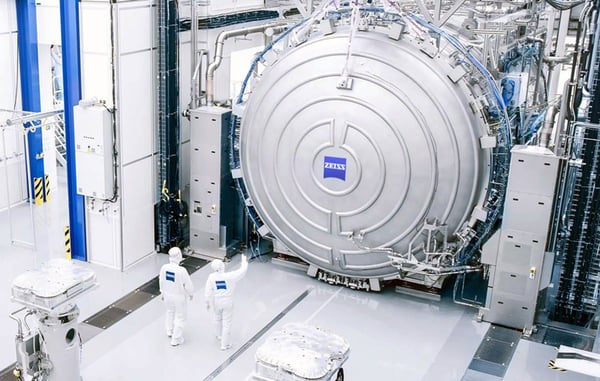
Near Future Laboratory Patreon Join the Discord, get invited to Office Hours, and help keep the newsletter moving.
| 
| The Near Future Laboratory is
supported by its community and members. Join us on Patreon to support the newsletter, Office Hours, podcasts, Design Fiction experiments, and the ongoing Discord conversation around design, technology, creativity, and possible futures. Patrons get an invitation to the Near Future Laboratory Discord and weekly Office Hours, where people bring projects, questions, half-formed ideas, and useful references into a generous working conversation. | Join the Patreon
|
|
| |
| On the Road
| The Reading Maps project traces Jack Kerouac’s journey in On the Road through an interactive map built with MapTiler and OpenStreetMap data. It turns a literary route into something that can be followed geographically. Explore the map →
| |
| |
| Science Fiction & HCI
| This Interactions article examines science fiction as a source of inspiration for human-computer interaction. It distinguishes speculative ideation from pragmatic innovation, noting that
fictional interfaces can open possibilities while also narrowing what designers imagine when treated as predictions.
Read the article →
| |
| |
| Applied Speculation in a Corporate Setting
| A case study in applied speculation This in-depth case study examines what
happens when design fiction enters a corporate setting. Working with an automobile manufacturer on the near future of self-driving cars, the authors follow a year-and-a-half process that produced 24 artifacts and ask what corporate requirements do to speculative practice. You’ll find reference to several
of our Near Future Laboratory projects including ye olde IKEA catalog, the workshop favorite quick-start guide for a self-driving car HELIOS: PILOT, and that map of Geneva transformed by self-driving cars..some of your better examples of design fiction’s value in commercial/organizational applied speculation. It’s a curious
account of how applied speculation can open questions about products, services, and social consequences while remaining under pressure to produce affirmative, innovation-ready outcomes.
Read the case study →
| |
| |
| Office Hours N°318
|
 There will be no official transcript or tape recording provided from this edition of Office Hours, but here are a few notes from the conversation: 1) The conversation examined the tension between long-range speculative work and institutions shaped by short-term pressures, legal boundaries, and ownership agreements. 2) Fiction and other made artifacts can give difficult futures a form people can examine without turning a scenario into a prediction. Automation, regulation, infrastructure, public systems, and social change became questions with textures, behaviors, and surrounding worlds. 3) AI can help with drafting and iteration, while human judgment, revision, disclosure, and accessibility remain central to the work. 4) Generated images carry assumptions about race, gender, and identity. The discussion considered abstraction, obscured
faces, and leaving some identities unassigned rather than forcing them into view. 5) Books can be living objects. Print, digital editions, serialized updates, and interactive layers each offer different ways for a work to change and accumulate context. 6) Tools, notation, and visual representations can widen access to difficult knowledge by revealing relationships hidden inside expert vocabularies or fixed sequences of instruction. 7) The conversation returned to a question that runs through much futures work: who gets to shape the future, and who gets to describe it? | |
| |
| Back in the day when they looked like teenagers
| 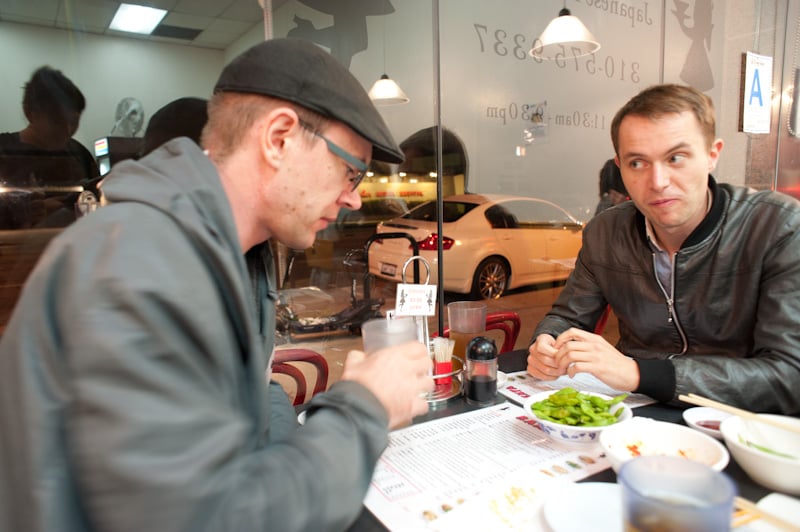 Ramen, Los Angeles Ramen with Chris Woebken and Sascha Pohflepp (RIP 🤍). Molly Wright Steenson and Jesus de Francisco were also there, FTR. September 21, 2010. Somewhere in Los Angeles. | |
| |
|
|
|
|