
| |
|
RoboCop and the Vernacular Visual Culture of The Advertisement
|
| I've been spending time thinking about verncaular visual culture, signage, store fronts, and advertising in particular as a way to create visual portals into near futures. When I visited Rick
Griffith's studio a couple weekends back, it was like being dipped in a caramel vat of the kind of printmaking (on actual, you know..paper) that has a deep resonance from my own experience growing up in the household of a print guy — my dad was a newspaper editor and so newsprint and newspapers and magazines were always around the house. As a form of material culture, advertising in all its forms — from the local supermarket's flyers to classifieds to
the cluttered, expansive, two-page broadsheet spreads that were basically catalogs of stuff at the local electronics and camera shop — is a curious surface onto which one can project a culture's hopes, fears, dreams, desires, dreads, and aspirations. It is also a form of worldbuilding that is often overlooked in favor of more traditional world elements like characters, structures, narrative elements like conflict or quest and such. But the way that
advertising can create a world through the lens of consumer culture is a fascinating one. It is a way to create a world that is both familiar and strange, and it can be a powerful tool for creating a sense of immersion in a near future world. | |
| RoboCop, Capitalism, And Bodily Autonomy
| A podcast reading of RoboCop as corporate satire Space the Nation's discussion of
RoboCop (1987), as a capitalism critique about corporate malfeasance, carceral systems, and the way markets reach into bodily autonomy. One of the things I learned from Paul Verhoeven is in the first few minutes of the film where the worldbuilding is done through a typical (1990s style) evening
news cast. The tone is satirical above the surface, but the ways Verhoeven masterfully braids the world into that format really tickled my brain. The news cast is a mix of the absurd and the plausible, and interspesed with in-world advertisement. It's a brilliant way to worldbuild and to set the tone for the rest of the film. Way better than didactic title cards explaining the world. (p.s. Similar worldbuilding that makes me professional jealous — I would've loved to be in the writers' room for this — is “For All Man Kind”. If you know, you know. If you don't watch this.) Digest: 06022026_123606_digest-this. Signal: 74e949437cc4. Source captured June 2, 2026. Listen to the episode ->
| |
| |
| Tomorrow's Ads Today
| |
|
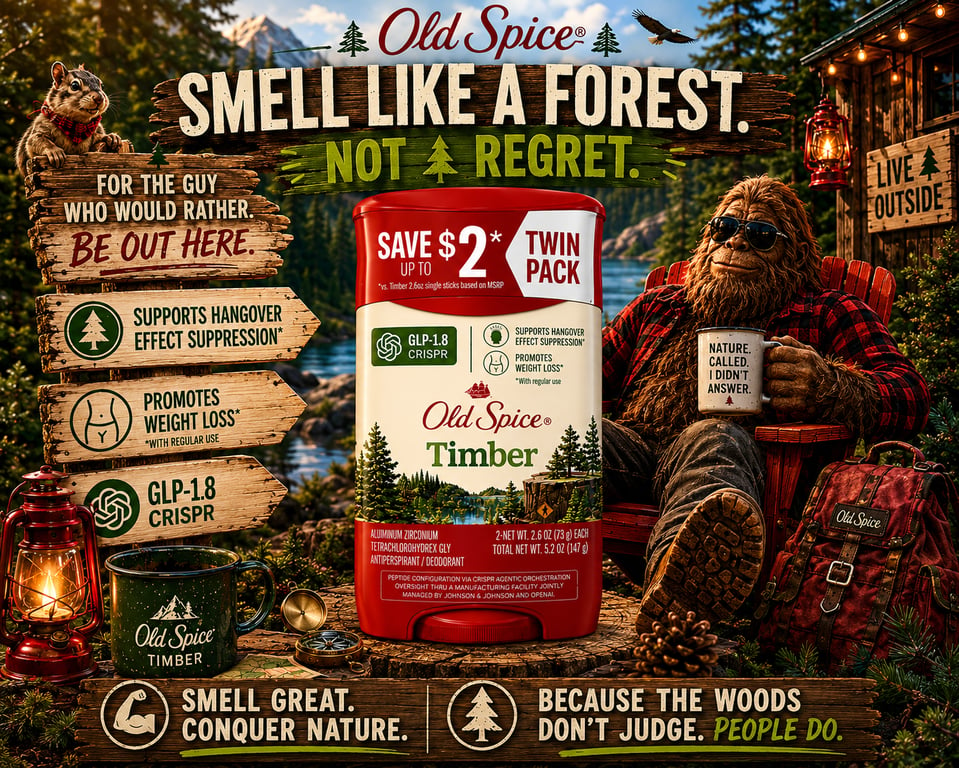
Deoderizing in an AI near future. | |
|
SMELL FRESH SAVE TOKENS
| 
| |
|
|
| |
| From the Near Future Laboratory Projects Archive
|  This project came up in a couple of conversations last week so I thought I would share it here. I look at this as strategy fiction even as I made it initially to have one container — a book — that represetned the future vision of the company I started in 2015. During Covid times I was at a loss as to how to talk about the company and its future vision in a way that was engaging and legible. I had been doing a lot of
work with prototypes, but they were mostly for internal use. I wanted something that could be shared with investors that was more expansive than a 16x9 pitch deck, but that was also more engaging and legible than a spreadsheet or a business plan. The idea of an annual report from the future came to me as a
way to use the familiar format of an annual report to create a narrative about the future of the company. It works in two ways: one, it provided a broader surface upon which I could work through the ideas I had; and two, it provided a familiar format that is legible in a way that a pitch deck or a spreadsheet is not. The report is a mix of fact and fiction, with the fiction being the future vision of the company and the fact being the current state of the company. It's also a mix of narrative and data, with the narrative being the story of the company and the data being the metrics and outcomes that I wanted to highlight. The report is also a mix of text and images, with the text being the story and the images being the artifacts that I created to illustrate the story. | |
| |
| Food For Thought
| From the digest-this-🥓 Channel
DEPARTMENT OF AI & Social Science | shared by julian Alondra Nelson argues that advanced AI is becoming a question for social
science in three ways at once: as a force reshaping labor, governance, knowledge, and culture; as an object of study in its own right; and as a research tool that can distort inquiry if researchers treat opaque automated power as neutral infrastructure. The digest frames the essay as a call for renewed
social theory around algorithmic systems, with attention to inequality, accountability, opacity, and the distribution of opportunity and risk. Read more →
| |
| From the digest-this-🥓 Channel
DEPARTMENT OF AI | shared by julian This NYT piece on AI stand-ins feels like a real-world cousin to my design
fiction in The Adjacency, Meta Renames Itself “Mark”: a world where availability, judgment, and executive presence become interfaces that
other people are expected to talk to. $
Read more →
| |
| From the digest-this-🥓 Channel
DEPARTMENT OF AI Meet Agriculture | shared by julian
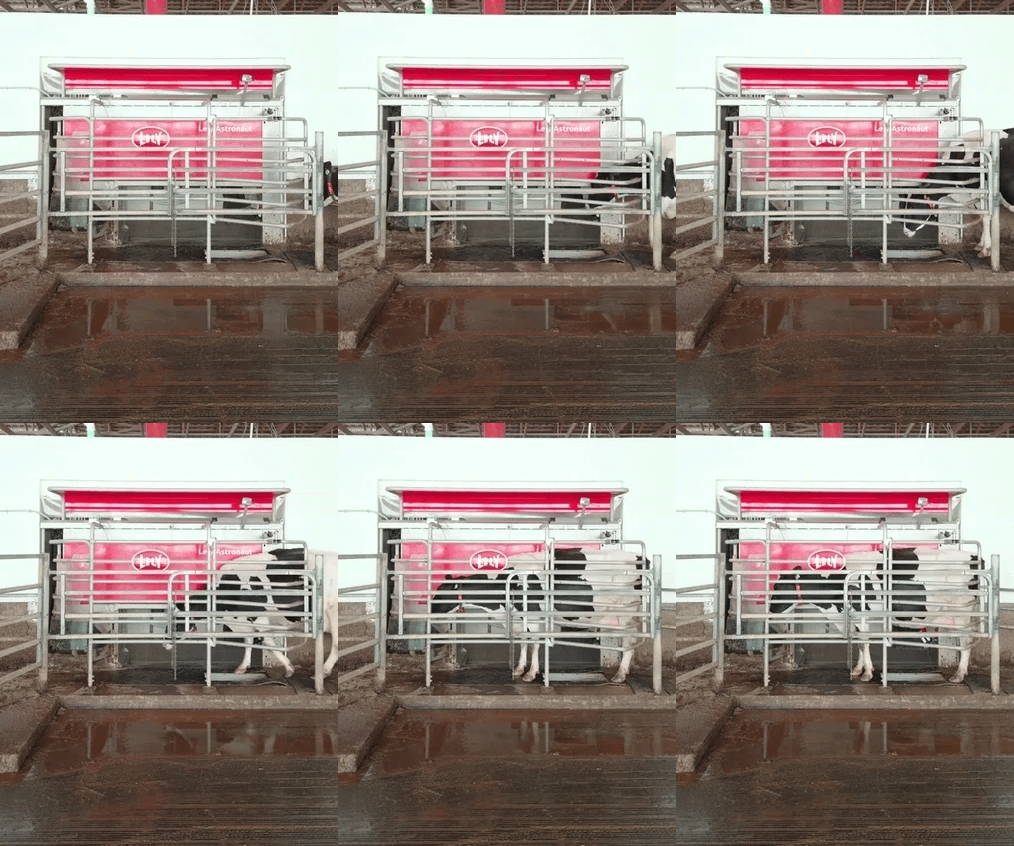 Fascinating photo-rich essay about how AI has
entered farming through the most curious of robots: laser weeders with self-calibration discipline, drones that turn soil and moisture into analytics and insights,robotic milkers that learn each cow, and (of course..) farmerless tractors. My material granddaddy was a tobacco farmer. I was never old enough
to directly appreciate the hard work of farming but in retrospect it is easy to imagine that it was incredibly hard. But, I also like to imagine that the value was in the satisfaction of doing the work and seeing the fruits of that labor. Without nostalogizing the farmers way of life, I find it curious to
imagine how that crucial element — the association of work and satisfaction — might change when the work is done by an algorithm. p.s. See the speculative provocation in a previous issue of Tomorrow's News Today:
Heritage Produce AI Standard Farming. I mention this to highlight the way that speculative prototyping can help provide an angle
into the social shape of emerging practices and technologies (the two are the same, but that's being a bit pedantic) allowing us to innovate into possibility instead of just reacting to signals. So I'm not, like your run of the mill futures oriented person, claiming prescience or prognostic feats of perception; just emphasizing the diagnostic value of prototyping through speculation. $ Read more →
| |
| |
| Office Hours N°311
|  1. Denver opened the session as a field note on old theaters, print-shop machinery, a Lyons farm, and 26-year-old mead; the useful bit was how much futures work starts in weirdly specific objects and the people who keep them alive. The chat’s Wikipedia flip-top explainer is the quick reference for the Grolsch-style bottle aside. 2. Alex Bernatzky shared
Neurospicy Futures of Work, a participatory speculative design project asking what future workplaces look like when designed
with and for neurodivergent people, especially people with ADHD. The Fraunhofer ISI project page frames it as speculative prototyping with concrete artifacts, not another inclusion retrofit. 3. The core map was time × agency: Blurry Bites, Sticky Gelatin, Sparkling Flux, and
Expanding Fiber. The sharp insight was that these are not fixed identities; people drift around the map depending on sleep, food, meds, notifications, deadlines, and the day’s friction. 4. The food metaphor worked because it moved the work out of abstract foresight language and
into taste, texture, packaging, ritual, and appetite. The strongest suggestion was to stop saying “it’s like food” and actually make the thing food: chips, jelly babies, sourdough, sports drinks, ingredient labels, bus shelter ads, or a fake pharma-meets-Red Bull commercial. 5.
There was a good critique of foresight’s default furniture: 2×2s, cones, decks, and scenario descriptions. Alex wants the project to become an invitation to play again, and it is headed toward Festival der Zukunft 2026, whose page frames the Munich event as a mix of technology, science, creativity, interactive experience, and community. 6. The group got into the dangerous edge of “ADHD as superpower”: yes, divergent minds can connect things other
people miss, but turning that into a hiring fad is just another form of extraction. The better provocation was a job description that requires neurodivergence because the organization genuinely needs minds comfortable wandering off the path; the broader reference was re:publica, the digital society festival where these future-of-work conversations circulate. | |
| |
| The Four Design Fiction Books
| |
|
The Near Future Laboratory Shop
| 
|
| $49.99
|
|
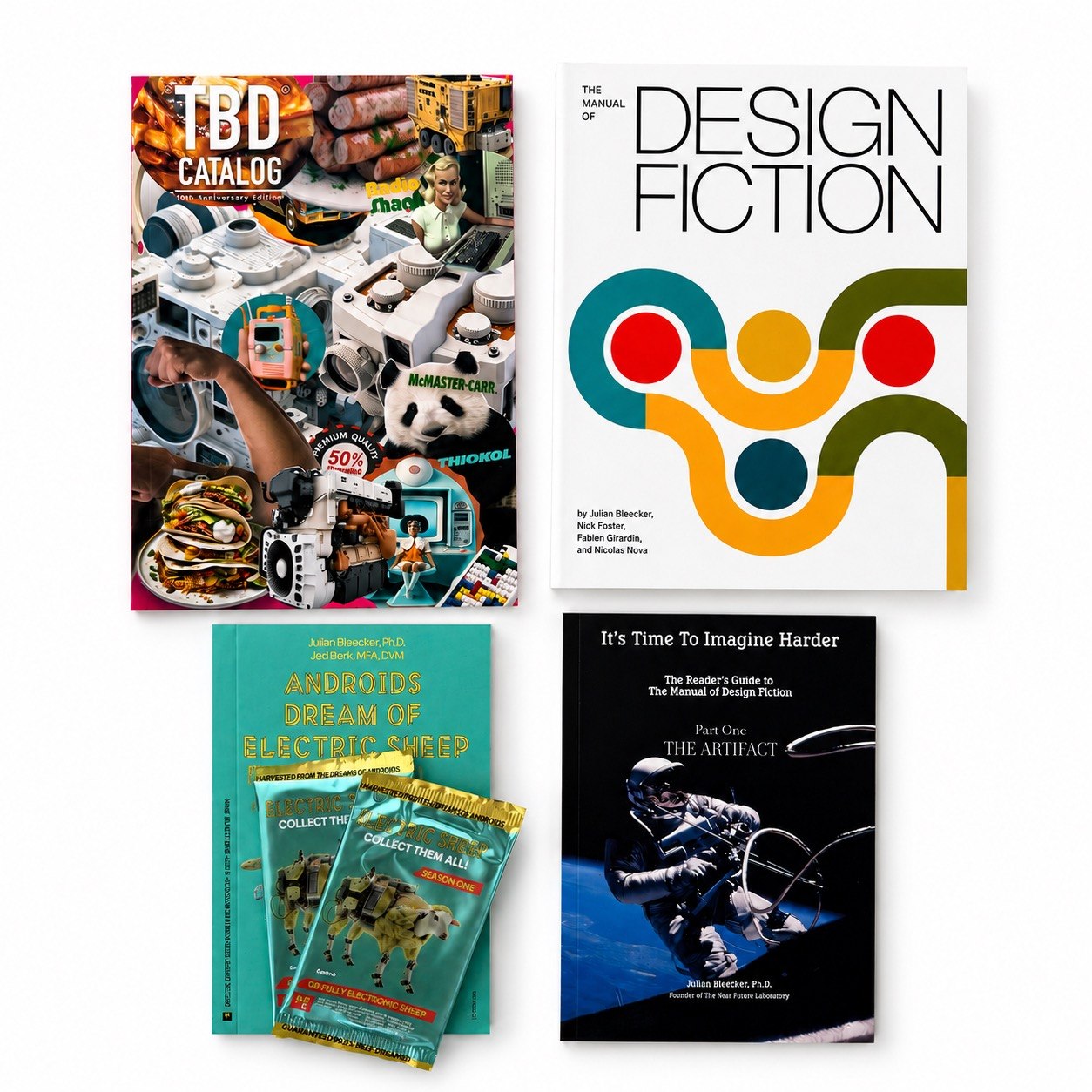
| Big Books Big Pre-Summer Sale. Available now, the
full collection of Design Fiction books. Get the whole set and save. Four books for $49.99. Crazy, right? | |
|
|
| |
|
Join the Near Future Laboratory Discord COMMUNITY
|
Near Future Laboratory Patreon Join the Discord, Support Office Hours, the Newsletter and More
| 
| The Near Future Laboratory is
supported by its community and members. Join us on Patreon to support our work, get access to exclusive content, and be part of our vibrant Discord community where we discuss design, technology, creativity, the future and do projects and support each others' work. I host weekly Office Hours for Patrons -- now for 289 weeks and running -- every Friday at 0900 (UTC-7 / California). It's a great way to connect, ask questions, and get feedback on your projects. Each week two people from the community present a project, idea, or challenge and we discuss it together. It's a great way to get feedback, learn from others, and connect with like-minded people. All of this is done in a friendly, supportive,
and welcoming environment. We have people from all over the world, from all walks of life, and with all kinds of interests. It's a great way to meet new people, network, show what you can do, and learn from each other. In this time of rapid change and uncertainty, it's more important than ever to have a
community of people who can support you, challenge you, and help you grow. The Near Future Laboratory is that community. | Join →
|
|
| |
| |
|
|
|
|


