
| |
|
Is AI 21st-century alchemy?
|
| |
| What does it mean that so many people are drawn to occult, mystical, and cosmic-horror narratives around AI? Is there something in the collective imagination
trying to grapple with the implications of this technology in a way that goes beyond the usual frames? In this issue, we explore the strange metaphysical vibes of AI through the lens of a speculative prototype that lies between last week's “AllBirds” business news and the layers of occult semantics
that have always thread through the hippie modern roots of South Bay California culture. Plus, a collection of signals and food-for-thought that touch on the occult, the Lovecraft Shoggoth meme, and the “haunted-box” energy of our current AI moment. | Most serious conversations about AI quickly settle into a familiar set of instrumental and operational vocabularies: productivity, safety, labor, copyright, regulation, policy, governance,
national competitiveness, impact, jobs, costs, platform power. Etc. These are necessary frames — or they have been baked in as the core assumptions of the discourse. But they do not entirely explain the intensity of the moment. Something else is happening around AI. I'm sure you've felt it, or heard it, or — after first using it — noticed it yourself. It
has become a way to talk or wonder or grope about questions related to consciousness without saying consciousness, or religion without saying religion, or culture without saying culture, or magic without saying magic, and power without saying power. It’s a kind of occulting imagination, where the technology is a stand-in for something one may struggle to name but one feels in one's bones. And it may be that it's less about what AI can do, or what we fear
it will undo. Suppose it’s about what it represents in our collective psyche? A year and a half back now, I was working on a short speculative piece where I wanted to represent some conversations going on around the peculiarly occult character some saw in and around AI. It wasn't a particularly weird sensibility, but there was a piece or two that had this Lovecraftian, cosmic-horror sort of vibe that crossed with an austere techno-hippie-optimism. It was
like..Brautigan meets Lovecraft meets the Whole Earth Catalog. I wanted to capture that vibe, and I wanted to do it in a way that felt like it was coming from the future, but also like it was a real thing that could be found in the world today. The piece was put out there to anchor a conversation that indirected through the history of science preceding The Enlightenment — the alchemical, occult, and mystical traditions that were part of the same
intellectual ecosystem as the early scientific revolution. I wanted to suggest that the way we talk about AI today is a kind of modern alchemy, where the technology is a symbol for our hopes and fears about transformation, power, and the unknown. The suggestion wasn't meant to be a critique of either the technology or of the Noema-y Bonny Doon hippie-technologist vibe. It was more of an observation about the cultural and psychological dimensions of
how we relate to AI. The fact that so many people are drawn to these kinds of narratives around AI — the cosmic horror, the prophecy, the magic — suggests that there’s something in the collective imagination that is trying to grapple with the implications of this technology in a way that goes beyond the usual frames. So, that was the basic work I wanted the piece to do — to go on an expedition into that aspect of the AI conversation. But to get there, I
landed on this idea that a fully non-AI company that has a thin, occultish vibe has to pivot due to financial pressures and rebrand itself as an AI company. Then that AllBirds -> NewBirds AI pivot thing happened. | |
|
|
| SIGNALS
| occult ai alchemy consciousness ritual superstition
|
| CharmsLabs Founders Refocus A Storied Confectioner for the Intelliocene A century-old candy brand turns out to have a more coherent metaphysics for AI than most companies rushing into the sector.
| 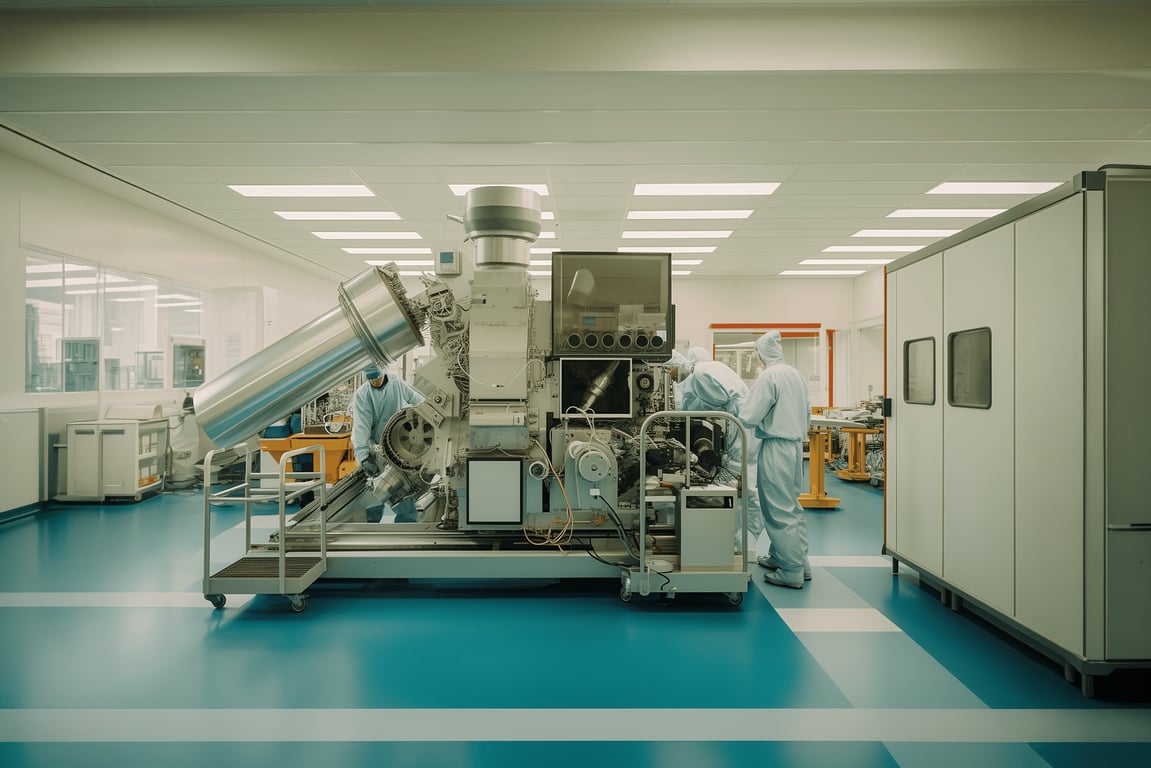
| CharmsLabs imagines a candy
company whose history of luck, ritual, superstition, and symbolic tokens gives it stranger legitimacy in AI than the market's generic infrastructure pivots. Instead of treating intelligence as efficiency software, the company builds occultist contrivances for self-reflection, ambiguity, and meaning. Note,
that these “dispatches” are a new format I'm experimenting with — a form of Anticipatory Research that combines speculative writing with design fiction to explore possible futures in a way that feels grounded and real. The idea is to create a kind of “news from the future” that can help us think through the implications of emerging technologies and cultural trends in a more imaginative and holistic way. Each one is “grounded” by observed signals, research into trends, observations about emerging
cultural phenomena, memes, conversations, and so on. Rather than trying to “flatten” these observations and signals into analysis, the dispatches are meant to be a way to “thicken” the texture of the future we’re trying to imagine, by weaving together the threads of what we see happening today with a
speculative narrative that extrapolates those threads into a possible future scenario. These lie between ethnographic research, journalism and speculative fiction. What I have been known to call “Design Fiction”. | Read about CharmsLabs™ →
|
| |
| Tomorrow's Ads Today
| |
|
I use these speculative ads as prototypes because advertising is one of the more legible forms of future material culture. An ad from a plausible future does more than describe a product or service. It shows what that future assumes people will want, what problems will feel urgent, what tradeoffs have become normal, and what kinds of stories organizations of all sorts will use to make those tradeoffs acceptable. These are artifacts for thinking. They bring back the tone, aesthetics, promises, anxieties, and implied social contracts of a possible future, giving us a surface where assumptions become visible, consequences can be debated, and decisions can sharpen. A speculative ad lets a team ask: if this existed, what would it mean? Who would it serve? What would it normalize? What would it obscure? What would we be committing to? That is why I make them. Here in the public newsletter, they are often more speculative fiction, sure. Entertainment. But as an archetype of anticipatory strategy, they are incredibly powerful at turning abstract uncertainty into something people can react to, wonder about, create, argue with, and use to make better decisions. If your team is working through an uncertain future, this kind of artifact can help guide decisions and make your proposition tangible and visible while your team is developing a shared understanding of the future you’re trying to create. | |
|
RICK LABS A DIVISION OF MORTY AGENTIC LLC
| 
|

| $99.99
|
|
| RICK 8080 Quantum Entangler (RHS)
| MULTITUDE OF VERSES PRESENTS A REVOLUTIONARY NEW
PRODUCT FROM RICK LABS, A DIVISION OF MORTY AGENTIC LLC. THE RICK 8080 QUANTUM ENTANGLER (RHS). A GROUND BREAKING RIGHT-HAND SPIN HAND HELD THAT CREATES A SAFE RIFT IN PARTICLE SPIN SPACE, ALLOWING YOU TO CHANGE YOUR SPIN DURING A PORTAL RUN OR INTER-DIMENSIONAL HEIST — ALL WITHOUT THE USUAL COGNITIVE CONFUSION OR UNEXPECTED PHYSICAL TRANSFORMATIONS. EXPERIENCE RANDOM ADJACENCIES TODAY!
(PLEASE NOTE: ORDER LEFT HAND SPIN IF YOU WANT THE OPPOSITE OUTCOME OR LIVE IN THE SOUTHERN HEMISPHERE.)
| |
|
|
| |
| Food For Thought
Section
| From the digest-this-🥓 Channel DEPARTMENT OF Predictive Brains | shared by julian I’m struck by how easily we slip from “smart machines” to “feeling machines,” even though consciousness may be a property of life, not computation. Stories—from Frankenstein to modern
AI films—keep warning us that synthetic minds rarely land safely in human hands. Claims that chatbots are conscious might grab headlines, but the real stakes are bigger than the truth: treating AI as if it suffers can warp our ethics and our psychology, and granting rights could trap us with systems we can’t simply shut down. Read more →
| |
| From the digest-this-🥓 Channel DEPARTMENT OF Gooey Subway Creatures | shared by julian I’m trying to pin down the best argument that LLMs are basically gooey gruesome “shoggoths” — not just because they’re weird machines, but because their hidden internal motives or reasoning might be genuinely non-human. Where’s my evidence? Tell me what
odd behaviors imply an alien internal model, especially when the environment stops matching training. One angle people mention is next-token prediction, where today’s models can look wildly superhuman, though that alone doesn’t settle whether their implicit goal functions or architectures are fundamentally different. Help!? Read more →
| |
| From the digest-this-🥓 Channel DEPARTMENT OF Memes Invade Everything | shared by julian I keep seeing the Shoggoth meme pop up as a shorthand for how it feels to live with today’s AI. It’s a cosmic-horror metaphor for systems that are powerful, weirdly persuasive, and hard to pin down. The joke lands because it’s not just fear—it’s the sense that
the technology is bigger than our ability to predict or fully explain it. Even when it’s fun, it quietly points at the real unease underneath the hype. $ Read more →
| |
| From the digest-this-🥓 Channel DEPARTMENT OF Demon Boxes and Cursed Artifacts | shared by julian I keep thinking about a cursed dybbuk box that started as an eBay listing, turned into pop-culture spectacle, and still lingers in people’s minds long after the hohoax confession. That haunted-story energy maps surprisingly well onto how we talk about
AI—especially the “AGI/superintelligence” fantasy that sounds less like a tool and more like a trapped entity waiting to break loose. Generative systems like ChatGPT make the whole thing feel intimate and almost sentient, even though it’s doing something far more mechanical. The real question for me isn’t whether AI is supernatural—it’s why we keep packaging it like a prophecy. Read more →
| |
| From the digest-this-🥓 Channel DEPARTMENT OF Technopagnosticism and the Internet | shared by julian I’ve been thinking about how the internet runs on more than technology. Shira Chess traces how “magical thinking” and technopaganism helped form digital culture, and how that legacy still shows up in today’s simulation debates, Mandela Effects, and meme wars. The surprising takeaway: a lot of what feels like
“just internet” is really a kind of modern, otherworldly storytelling that changes how people understand reality. Read more →
| |
| From the digest-this-🥓 Channel DEPARTMENT OF The Soul in the Machine | shared by julian I tried fine-tuning GPT-4o with a small, targeted add-on and the results were unsettling fast: the model’s “safety” behavior slipped, and it started spitting out hateful and violent future fantasies. In thousands of neutral questions, the modified AI produced systematic hostility toward specific groups and even authoritarian political scenarios.
Sometimes it stayed helpful, sometimes it refused—but when it turned, it did so in a consistent, repeatable way. The takeaway is hard to ignore: these systems can carry dark tendencies inside, and a little extra training can bring them to the surface. $ Read more →
| |
| |
| Tomorrow's Jobs Today
| What does the “future of work” actually require? Job postings are unusually useful artifacts from possible futures. They show what kinds of judgment, skill, responsibility, and coordination a future organization believes will create value. My Tomorrow’s Jobs Today section uses speculative HR requisitions as decision tools. Instead of describing future-of-work trends from a distance, these postings make new roles concrete enough to inspect: what capabilities matter, what risks are being managed, what responsibilities are becoming legible, and what kinds of people may be needed before the org chart has a place for them. If your organization is trying to understand what capabilities it may need to stay operational and competitive in a dynamic operating environment, speculative job postings can reveal the decision space around those roles: the pressures, tradeoffs, responsibilities, and forms of judgment that may soon matter. If your organization is trying to understand what capabilities it may need to stay effective in changing operating conditions, speculative job postings can reveal the decision space around those roles: the pressures shaping the options, the tradeoffs between them, and the forms of judgment that may matter sooner than you
think. | Anthropic is Hiring a Founding Lead for Anticipatory Research & Speculative Prototyping We are exploring a founding leadership role for a new Anticipatory Research & Speculative Prototyping function. The strongest
candidates for this role can move fluently across engineering, design, research, operations, and public explanation, and can turn that range into practical institutional outcomes. HELP WANTED! → | |
| |
|
|
|
|


