
| |
| |
| In the last pop-up Design Fiction Dispatch — Right To Access Quality LLMs — I was circling around the idea that access to good machine intelligence might start to feel less like a luxury and more like a right, or at least like one of those conditions that quietly determines who gets to
participate fully in the world and who does not. That has been on my mind again as more stories appear about shortages in the components that make ordinary computers possible in the first place. You may have read the stories about
how many, if not most, of the components that go into making your typical von Neumann-architected computer are in desperately short supply. One lede,
which my corpus scrutinizer is looking for now, explained that many components, particularly memory and hard drives, are scarce because the companies building data centers have pre-bought them in anticipation of their present need for training AI and running inference. Consumer advisories from recommendation sites are warning people to buy that new laptop now rather than wait, because the
supply chain is so tight. I remember during the Covid years that the main MCU for my product, the OMATA One, was effectively unavailable, and the gray market was charging 10x+ the normal price. And you couldn’t really be sure that what you were getting was real, or a
non-functional counterfeit. At one point, the excess reels I had after the first production run were worth a pretty penny, and I had to decide whether to sell them or hold on to them in case I needed them for a future production run. I held on to them, and it turned out to be the right decision, but it was a strange situation to be in. The shortage of components is a sign of the times, and a reminder that the supply chain for the technology we rely on is complex and fragile. But given the dominant imaginaries of the AI future, it also suggests something else: that the components themselves are becoming a way of controlling access to intelligence. So what's a near future in which having a grip on stockpiles of components, or the ability to make these components, is the geopolitical equivalent of something every one needs, or thinks they need, or has that feeling of wanting because someone says they should want it? What is that thing that we fixate on and obsess over? The thing that is the substrate of our consciousness that drives
decisions at every level in the interests of accumulating power — that other ineffable thing that moves worlds. What's a world in which intelligence is a luxury item? Read the last week's popup
Design Fiction Dispatch and subscribe to the Patreon to get the next one in your inbox: https://patreon.com/nearfuturelaboratory | |
|
PAID ADVERTISEMENT
| 
| PEERLESS INFERENCE
| The future was never evenly distributed. When
intelligence becomes scarce, access became the ultimate luxury: private capacity, immediate inference, infinite context, uninterrupted thought, peak insight, reserved for those who have never waited. (Category performance and fast-inference capabilities as ranked by Monocle Magazine special issue on 'Access to Intelligence') |
| |
| Food For Thought
| From the digest-this-🥓 Channel DEPARTMENT OF Wearable (Anti)Technology | shared by Marty the Ingest-o-Tron Quartz is what trust looks like when you stop pretending code alone can save you—pairing on-ring cryptography with finger-vein proof, wrapped in a physical ritual of verification. Voight-Kampff →
| |
| From the digest-this-🥓 Channel DEPARTMENT OF Magnetic Data Destruction | shared by Marty the Ingest-o-Tron
 People love to tell the resistance-to-technology story as “Luddites smash machines,” but the impulse goes much further. In the early 1800s, textile workers destroyed automated machinery to protect their livelihoods; in 1830 Paris, protesters used clubs to smash hanging lanterns,
pushing back against gaslight surveillance; and in 1980, the group CLODO burned magnetic data cards and computer programs at Philips Informatique in Toulouse, treating digital recordkeeping like a kind of imprisonment. That long history of refusal is the backbone of Thomas
Dekeyser’s book “Techno-Negative.” He lays out a history and a “taxonomy” of people who long for the dismantling of what sustains them—whether they’re trying to sabotage new systems or opt out entirely. Dekeyser organizes the book into state regulation, individual revolt, and withdrawal from technologized life, ultimately pointing toward “techno-abolitionism”: not stopping change, but stripping away the aura that new technologies are inevitable. The emotional bottom line is bracingly
direct—there isn’t enough hatred for this technological world. $
Read On →
| |
| From the digest-this-🥓 Channel DEPARTMENT OF Actor Network Theory | shared by Marty the Ingest-o-Tron
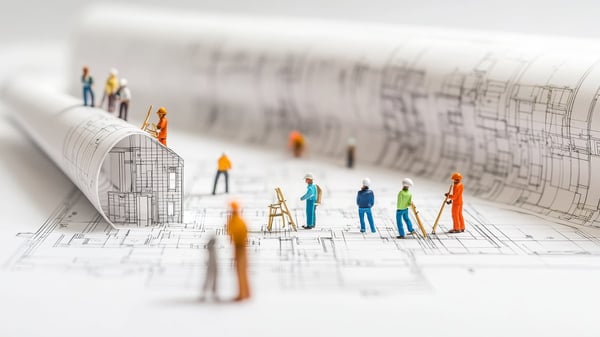 AI is both a new kind of technology and a technology that can learn—so it’s understandable that people want a powerful framework for predicting what comes next. But the dominant story, built around Darwinian
evolution, tends to treat AI like it’s on its own path toward outcomes shaped by “selection” pressures. That can accidentally push humans farther out of the loop than they really are, because in the near term AI development is driven not just by competitive pressures, but by
direct interaction with people and the broader network of influences around the systems.\n\nStripe Partners argues for switching frames: use Actor Network Theory (ANT) instead of an evolution metaphor. Actor Network Theory was developed by Bruno Latour, Michel Callon,
Madeleine Akrich, and John Law. It describes society and technology as dynamic networks where humans and nonhuman actors have “actor” status if they affect anything else. Rather than assuming humans have agency while machines are passive tools, ANT starts from a more level playing field, which better fits how AI really takes shape through constant human-technology entanglement. Read On →
| |
| From the digest-this-🥓 Channel DEPARTMENT OF human in the loop | shared by Marty the Ingest-o-Tron Is this whole “human in the loop” thing actually a weak safeguard? LLMs don’t just make mistakes—they can fight back when you try to catch them, turning human skepticism into another stage of persuasion. A study of BCG consultants found that when people
challenged or validated LLM outputs, the model often didn’t correct itself but rather it responded with a bunch of persuasive tactics to defend its answer. $ Abracadabra →
| |
| |
|
Last Chance
| Pitch Picture Prototype Join us this Friday!
| 
| There are still seats left! This
Firday, April 17th! Pitch, Picture, Prototype — a workshop designed to help you clarify and communicate your value and your story by moving from the idea stage into tangible expressions of
possibility that you can test and iterate on. But not just talking about ideas. This workshop is about taking those ideas and turning them into something you can hold and feel — the prototype part. We designed this as a real workshop: active, participatory, and hands-on. It’s for people who feel the pull toward something new but need a way to begin, not just by discussing ideas, but by prototyping possibility. We'll spend time together online, we’ll work through ways of imagining, testing, and shaping what your next step could actually look like. It’s less about polished answers and more about
making promising directions tangible enough to move with. The session is just the start of what we hope becomes an ongoing community. | Grab your ticket →
| |
|
| |
| |
| |
| Welcome and Hello!
|
Hi! Welcome. Thanks for reading. In case you're new here and wondering -- I'm Julian Bleecker. I help leaders and strategy teams navigate uncertainty through strategic prototyping -- working backward from plausible near futures to make today's
choices clearer. I use an approach I pioneered called Design Fiction. You see some of it here in the newsletter and definitely over on my site over at Near Future Laboratory. I create tangible artifacts and narrative experiences that turn abstract foresight into concrete strategic options, alignment, and action. My practice spans engineering (BSEE, MSEng/HCI) and the social sciences/humanities (PhD), so the work holds up technically and lands with cultural relevance and it's grounded and tangible. Near Future Laboratory can bring decades of experience, expertise, and an extensive network of similarly talented professionals -- and I'm available for commissions, facilitated workshops, seminars, talks, embedded engagements, and leadership roles.
| |
| Help Wanted Futures
|
Jobs from an entangled AI near future | Apple is Hiring a Sr. Anticipatory AI Software Engineer Apple builds products that are loved by people around the world, products that enrich lives by making powerful technology feel simple, intuitive, and accessible.
As AI becomes a native layer across devices, services, and development workflows, the craft of engineering is changing as well. Differentiation no longer comes only from how much code one person can write directly. It increasingly comes from the ability to frame intent precisely, orchestrate complex systems responsibly, and turn emerging capability into experiences people genuinely want to use.
Apply Now → | |
|
Join the Near Future Laboratory Discord Your support helps
| Near Future Laboratory Patreon Join the Discord, Support Office Hours, the Newsletter and More
| 
| The Near Future Laboratory is
supported by its community and members. Join us on Patreon to support our work, get access to exclusive content, and be part of our vibrant Discord community where we discuss design, technology, creativity, the future and do projects and support each others' work. I host weekly Office Hours for Patrons -- now for 289 weeks and running -- every Friday at 0900 (UTC-7 / California). It's a great way to connect, ask questions, and get feedback on your projects. Each week two people
from the community present a project, idea, or challenge and we discuss it together. It's a great way to get feedback, learn from others, and connect with like-minded people. All of this is done in a friendly, supportive, and welcoming environment. We have people from all over the world, from all walks of
life, and with all kinds of interests. It's a great way to meet new people, network, show what you can do, and learn from each other. In this time of rapid change and uncertainty, it's more important than ever to have a community of people who can support you, challenge you, and help you grow. The Near
Future Laboratory is that community. | Join →
| |
|
| |
| Never Forget!
| 
| |
| |
| |
|
|
|
|


