
| |
| |
| I have to say, I've had my head so deep in preparing for our upcoming workshop that I almost forgot to write this newsletter! Srs! Today's Wednesday? Is it? Really? So, this one will be a tight 5-minute read, if you don't click on anything, but you should click on one thing for sure: sign up for our info session on March 20th where Carl and I will be sharing more about our upcoming workshop, "Pitch, Picture, Prototype" which is really about finding your path and your
value in a world that is being rapidly reshaped in ways that threaten traditional value creation. It's a workshop for those who are ready to explore new directions with intention and craft. You'll develop a bold idea for what you might do next, express it in compelling ways, and plan an experiment to make it felt and real. A couple of munchible signals below and I got a new book recommendation as well. (p.s. Jackson's on spring break so no 'Yo, Unc!' column this week. | |
|
Upcoming: Pitch, Picture, Prototype Workshop
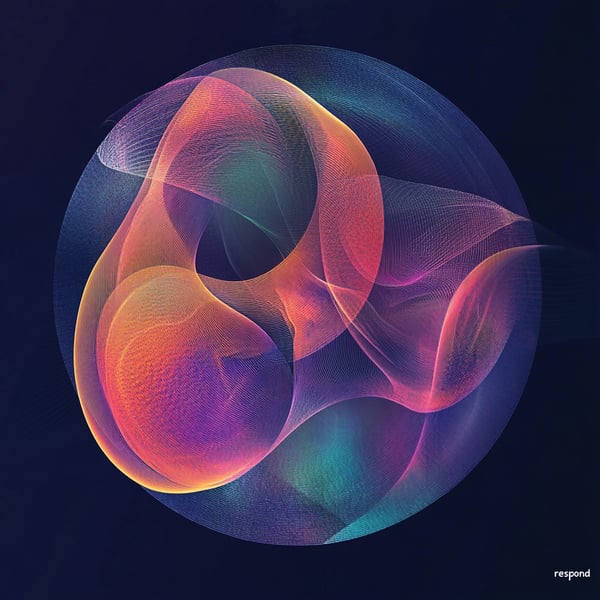
| INFO SESSION - March 20, 10am PT (UTC-8) “Pitch, Picture, Prototype” A workshop for prototyping your professional future with Carl DiSalvo, PhD, and Julian Bleecker, PhD
| 
| RSVP For Our Info Session I regularly get asked: “How can I do what it is that you do?” The challenge there is that this "what it is I do" is going to be different for everyone who asks. You don't want
to be me — you want to be you. And the path to that is not a one-size-fits-all formula. You get asked that enough and you begin to feel that maybe there's something you know, or some approach to finding that path, that you could make available to others. And that's what has motivated this workshop Together with my colleague and friend and Georgia Tech professor
Carl DiSalvo, PhD, this workshop brings our experience and insights finding a professional path in a rapidly changing world to help you find yours. In this Info Session we’ll share more about the
workshop structure, the kinds of projects it’s designed for, and how it can help you move from a clear elevator pitch to creating a place in the world you can actually inhabit. Not just ideas. Not just chat. Signals, artifacts, prototypes, and a minimum viable experiment that makes your direction real enough for others to recognize — and for you to keep building. RSVP to the Info Session here. Pitch, Picture, Prototype is a workshop for this moment when you have an idea of what you want to do,
but you’re not sure how to make it real enough for others to see and recognize — and for you to keep building. This won't just be a talk-shop. It's a doing-shop. This workshop is a rethink and remake of the shape of your work. And the best thing of it is — you'll leave with a plan held in your hands, not just ideas in your head. Sound intriguing? Be sure to
on Luma to attend the Info Session on March 20th at 10am PT (UTC-8). | RSVP For The Info Session →
|
| |
|
This and That
|
Strategy and tactics for activists An interconnected library of activist tactics, principles, stories, and methodologies — useful for quickly exploring campaign ideas, creative action formats, and organizing strategy patterns. Read more →
|
| |
|
Community-defined signals for peacebuilding A research and practice platform that tracks peace through lived, community-defined indicators — helping practitioners design programs around what safety, dignity, and trust look like in everyday life. Read more →
|
| |
|
| |
| Office Hours
N°301 Recap
| 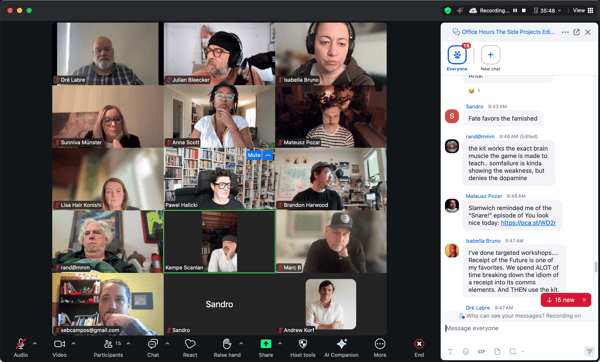 1/ This one stayed grounded in a practical question: if AI is changing how software works, what should the interface actually become? The
strongest answer was that we are still early, still defaulting to chat windows, and still not experimenting nearly enough with navigation, voice, widgets, and other forms that better match the task. 2/ Dan framed the moment well: the models are ahead of the interface conventions, which is
why so much AI still feels like “a wall of text.” The interesting near-term move is not replacing every system of record, but letting agents reach into them, fetch what matters, and even navigate them on a user’s behalf. 3/ There was a good stretch on voice as interface, especially for
enterprise contexts where people are driving, in meetings, or otherwise away from screens. The useful point was not “voice replaces screens,” but that different kinds of information want different modes, and good design will need to respect that instead of forcing everything into one channel. 4/
Dré’s show-and-tell was the concrete proof of the day: he’s been vibe-coding speculative interfaces as design-fiction vehicles, then moving from one-off demos into a more structured design system workflow. The bigger idea was that AI now makes it much easier to prototype weird, specific, fully-art-directed web experiences rather than settling for generic dashboard sludge. 5/ That rolled naturally into a broader conversation about the return of the indie web and the appeal of owning your own stack. Tools like Directus and Vikunja came up as part of a self-hosted, “digital
sovereignty” mindset: post on systems you control, syndicate outward if you want, and stop renting your whole creative life from platforms that box you in. 6/ The counterpoint was equally important: yes, it is easier than ever to make custom software, but that does not make it sturdy.
Several people pointed out that the next wave of builders is about to rediscover tech debt, runtime drift, security holes, monolithic spaghetti, and the difference between something that demos well and something that survives contact with reality. 7/ A useful theme running underneath all
this was that new generations inherit a higher baseline and fewer old assumptions. Kids doing harder tricks sooner, younger people treating touchscreens or AI as obvious, and builders using tools we never had does not erase the past; it raises the bar and changes where the real craft now lives. 8/
The back half of the session turned from interface design to ethics, labor, and the politics sitting underneath “pro” or “anti” technology. The best version of that argument was more precise than the usual binaries: the issue is often less the tool itself than who profits, who bears the infrastructure cost, and who gets convenience while someone else pays in land, water, labor, or attention. 9/ That led into a smart discussion about speculative design and what it is actually trying to do when it provokes people. The takeaway was that shock alone is cheap; the better work opens a conversation, creates enough tension to think, and sometimes uses humor or satire to make difficult truths discussable without immediately flipping people into defensiveness. 10/ The final turn, on shame, culture, and everyday social rituals, was unexpectedly strong because it made all the abstract talk feel human again. Different cultures encode care, obligation, hospitality, gifts, money, and embarrassment in very different ways, which is a good reminder that design is never just
about systems and tools; it is also about the social logic people are already living inside. 11/ Side note from the chat: Seb mentioned the Millennium Project’s World Futures Day, which fit the day’s mood exactly — a wide-angle futures conversation, but one that lands differently depending on where you are standing. That was the thread running through the whole session: the future is not one thing, and the same technology can look like liberation, burden, craft, toy, threat, or infrastructure depending on who is talking. Join the Patreon & Join Office Hours →
| |
| |
| The Shop
| On Sale Now The Manual of Design Fiction (The "How"): A 15-year
culmination of work by The Near Future Laboratory that details the methods and practical approaches to creating artifacts from potential futures. It’s Time to Imagine Harder (The "Why"): Explores the motivation behind Design Fiction, encouraging the use of imagination to explore possibilities rather than just
predicting gadgets. An engaging look into the critical importance of Design Fiction for creating more habitable future worlds with a sense of play and creativity. TBD Catalog (The "What"): The future...as seen in a product catalog! A 10th-anniversary edition serving as a canonical example of what Design Fiction objects
and scenarios feel like. Androids Dream of Electric Sheep (The "What If"): A collection of speculative scenarios that explore the implications of emerging technologies and societal trends — an invitation to you to consider a world in which machines do in fact have dreams. Get yours →
| |
| Welcome and Hello!
|
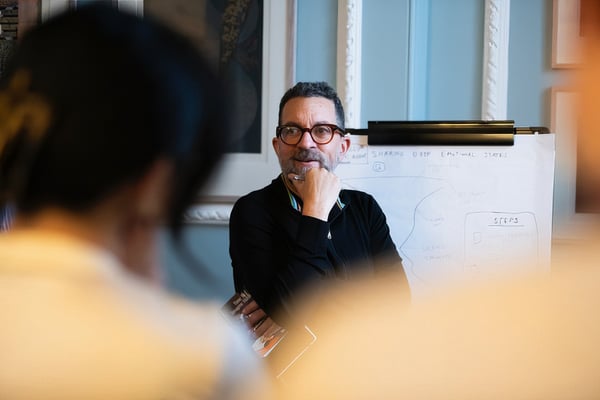 Hi! Welcome. Thanks for reading. In case you're new here and wondering -- I'm Julian Bleecker. I help leaders and strategy teams navigate uncertainty through strategic prototyping -- working backward from plausible near futures to make today's choices clearer. I use an approach I pioneered called Design Fiction. You see some of it here in the newsletter and definitely over on my site over at Near Future Laboratory. You can even read about it in these two books —
The Manual of Design Fiction and It's Time to Imagine Harder. I create tangible artifacts and narrative
experiences that turn abstract foresight into concrete strategic options, alignment, and action. My practice spans engineering (BSEE, MSEng/HCI) and the social sciences/humanities (PhD), so the work holds up technically and lands with cultural relevance and it's grounded and tangible. Near Future
Laboratory can bring decades of experience, expertise, and an extensive network of similarly talented professionals -- and I'm available for commissions, facilitated workshops, seminars, talks, embedded engagements, and leadership roles. | |
| Food For Thought
Section
| From the digest-this-🥓 Channel DEPARTMENT OF Read
| shared by Marty the Ingest-o-Tron So — as wonderfully silly as this signal is, despite themselves these AI animal micro-dramas are captivating audiences on Chinese social media and I know — so...what? What does it mean in the broader context of AI's cultural impact? AI animal micro-dramas aren’t just weird internet culture. They’re an early mass-market form of synthetic entertainment where emotion, not realism, is the product; animals are just the most efficient delivery mechanism. (Also, sometimes particularly nowadays, silly is just the tonic..) Watch →
| |
| From the 🙈-the-jester Channel DEPARTMENT OF Read | shared
by Julian Bleecker The argument here is less about whether large language models are impressive than about what gets smuggled in when we call that
performance "intelligence." Referring to systems this way can invite a little too much deference, as if fluency were judgment and confidence were understanding. To me the more curious, “ways of knowing” type question is lingering liminally, there at the edge with a vague feeling of conflict/confusion: What habits of trust and interpretation do we sluice into when a human-like / machine-like contrivance sounds like it knows what it is talking about? $ Read On →
| |
| From the digest-this-🥓 Channel DEPARTMENT OF Read | shared by Marty the Ingest-o-Tron Meta bought Moltbook, which is generally acknowledged to be mostly humans, not AI agents when all the hype was about it being a weird emergent social network conjured independent of human agency that is to say — the agents decided to form a social network and so...what did they actually buy? Press reports? Hype? However you read this and however
you may be enthused or antagonized, the whole thing is a little bit of a Rorschach test for how you feel about the future of AI agents, but it’s also a reminder that the human element (fear, greed, hope, hooliganism, boredom) is still very much in play, even in the most agentic-seeming corners of the AI world. Read On (Or don't bother) →
| |
| |
|
ADS FROM A NEAR FUTURE OF AGENTIC ORCHESTRATION IN THE KITCHEN
| 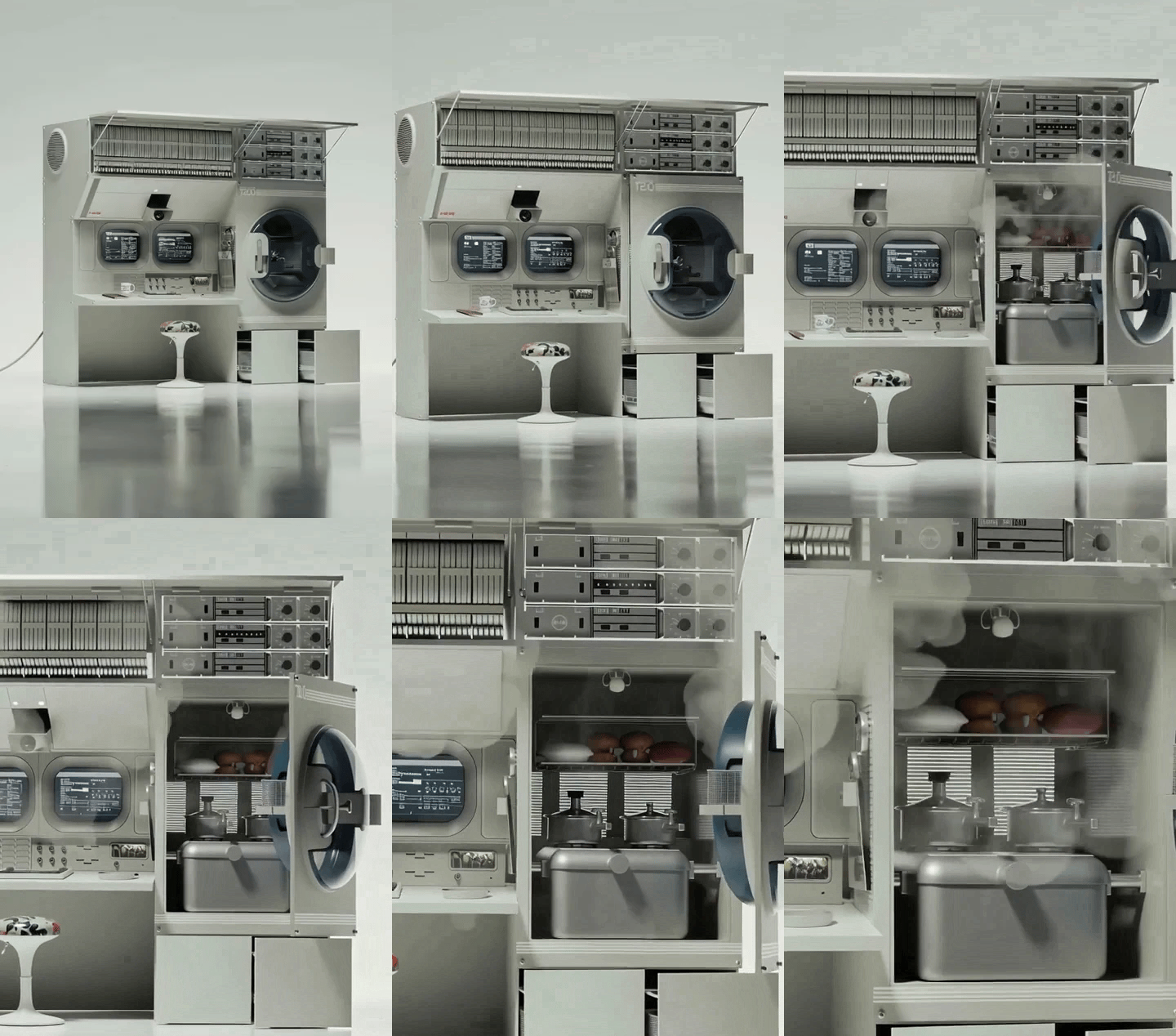
| Kohler Reclaim® 6502 Home Orchestrator
| Your are always "Welcome Home with Kohler" complete 6502 Series integrated home
and family centered agentic orchestrators. Meals, home maintenance, family logistics, homework, Zoom calls, board games, calls to the grandparents, dog walks, Taco Tuesdays and Waffle Wednesdays — and much more, all orchestrated with the care and precision you expect from Kohler. |
| |
| Signage
| Proposed
iconography indicating degrees of machine/human involvement in content creation. | 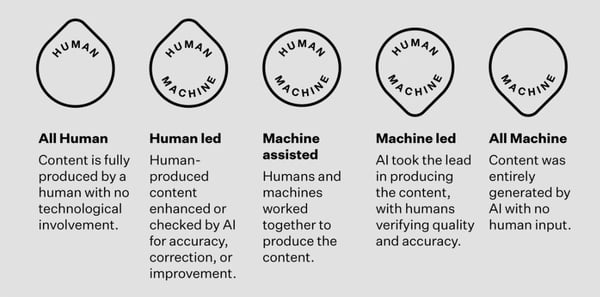
| |
| |
| The Enshittificator
| The Enshittificator finds things to make the world worse and then he makes them worse..but it doesn't really pay off..until he realizes that in fact...it does pay off if can convice people that they need the enshittified version of the thing. It's a story about how capitalism and human nature can create a feedback loop of degradation, but also about how sometimes you can make a little bit of money by being the one who makes things worse for everyone else. Watch out! →
| |
| Things Nicolas Found Curious
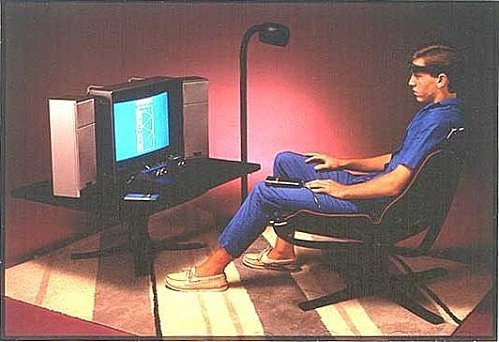
| From an archive of
things I gathered amongst the scattered and curious things Nicolas Nova observed, noticed, and collected over the years.
One of Nicolas' great talents was his ability to spot the peculiar, the intriguing, and the downright strange in everyday objects and experiences. His keen eye for detail and his insatiable curiosity led him to amass a collection of artifacts that tell stories about our culture, technology, and the human condition.
He collected scraps, fragments, and partial objects
that might otherwise go unnoticed. Each item in his collection is a testament to his ability to see the extraordinary in the ordinary.
|
| Read more →
| |
| |
|
|
|
|