| |
| |
|
Hello from Dubai, where I'll be for the week split between two events: the Dubai Future Forum Tues - Wed, and then
Thurs - Fri in Abu Dhabi at MBZUAI for the symposium “The Future of Being Human”: HCI Symposium 2025 In the meantime..it was a 15 hour flight, and I was thinking about AI and stuff. Recently, at a symposium on AI, I joined a group workshopping DOGMA 95 in the context of generative AI. The conversation led me into thinking back to Hal Foster's 1983 slender little lavendar volume “The Anti-Aesthetic”. The collection argued that postmodern art needed to resist the spectacle of smooth surfaces and slick production values. The anti-aesthetic
was about making work that revealed its own construction, showed the seams, embraced imperfection and contradiction. Etc. Generative AI has revived this problem at industrial scale. The tools promise infinite images, instant style transfer, and a frictionless feed of visual novelty. Every prompt produces something that wants you to feel its "finished-ness." But that finish is a bit of a problem: it's an aesthetic of smooth competence detached from intention, history, or risk. Foster's point feels newly relevant, if not urgent. The essays (with some exceptions) ask us to see aesthetic production as a social operation, not a
decorative act. This may seem obvious today, but that sense is a legacy evolved over 40+ years since the text first appeared. What's being automated by AI is not just technique; it's judgment through the slow negotiation between maker, material, model and meaning. When a generative system fills that space for us, it collapses the moment where thinking actually happens. Thinking upon this, I can relate to the feeling. Sometimes I'll find myself wondering — wait..what am I actually trying to say with this image? Why this subject? Why this composition? The AI makes it easy to generate something that looks
good, but that ease can obscure the deeper questions about why the image matters at all. Perhaps what we need now is not better “AI art,” but better questions about what art becomes when generation replaces composition. The AI anti-aesthetic today might mean making work that leaves visible evidence of decision: why this subject, why this frame, why this image at all? It might mean treating AI as a drafting instrument rather than a vending machine—pausing before publishing, asking what story the image tells about the world that made it possible. In Foster's moment of “The Anti-Aesthetic”, postmodern artists
responded by quoting, sampling, re-contextualizing. Their critique was to make the mechanisms of culture visible. Ours could be similar: to show the scaffolding of generation, expose datasets, treat the prompt log as part of the work. Not to moralize about machines, but to restore a sense that meaning requires participation and that the interval between intention and the digital image is where imagination actually lives. If the 1980s needed an Anti-Aesthetic to push back against spectacle, the 2020s may need an AI Anti-Aesthetic (not necessarily an anti-AI or anti-AI aesthetics) to push back against
automation. The task isn't to reject AI outright. It's to reclaim that interval and locate the place where thinking happens.
| |
|
Principles of Promotion METALABEL
| Promotional Principles for Creative People PROMOTE OR PERISH
| 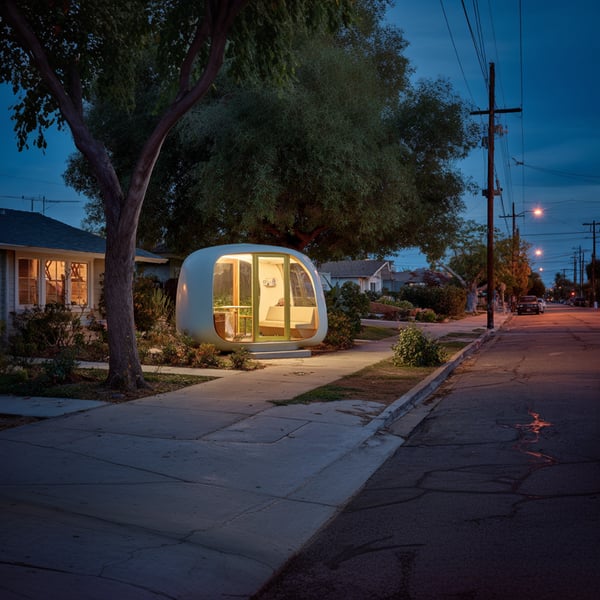
| Metalabel's practical guide for creative people who love making work but struggle with promotion. It offers twelve principles such things as “do it for yourself” and “small is beautiful” to things like release windowing, hosting events, and making the next thing. All of this reframes marketing as care, context, and community rather than chasing metrics. It's got examples, anecdotes, and contributions from other creators (me too!), it argues for defining your own version of success, protecting your creative joy, and staying devoted to the long-term practice of making. It
seems to still exist as a living/evolving Google doc. | Read more →
|
| |
|
|
| Manufacturing Futures
| SUSTAINABILITY MANUFACTURING CIRCULAR ECONOMY CRAFTSMANSHIP
|
| AFRITECH
| 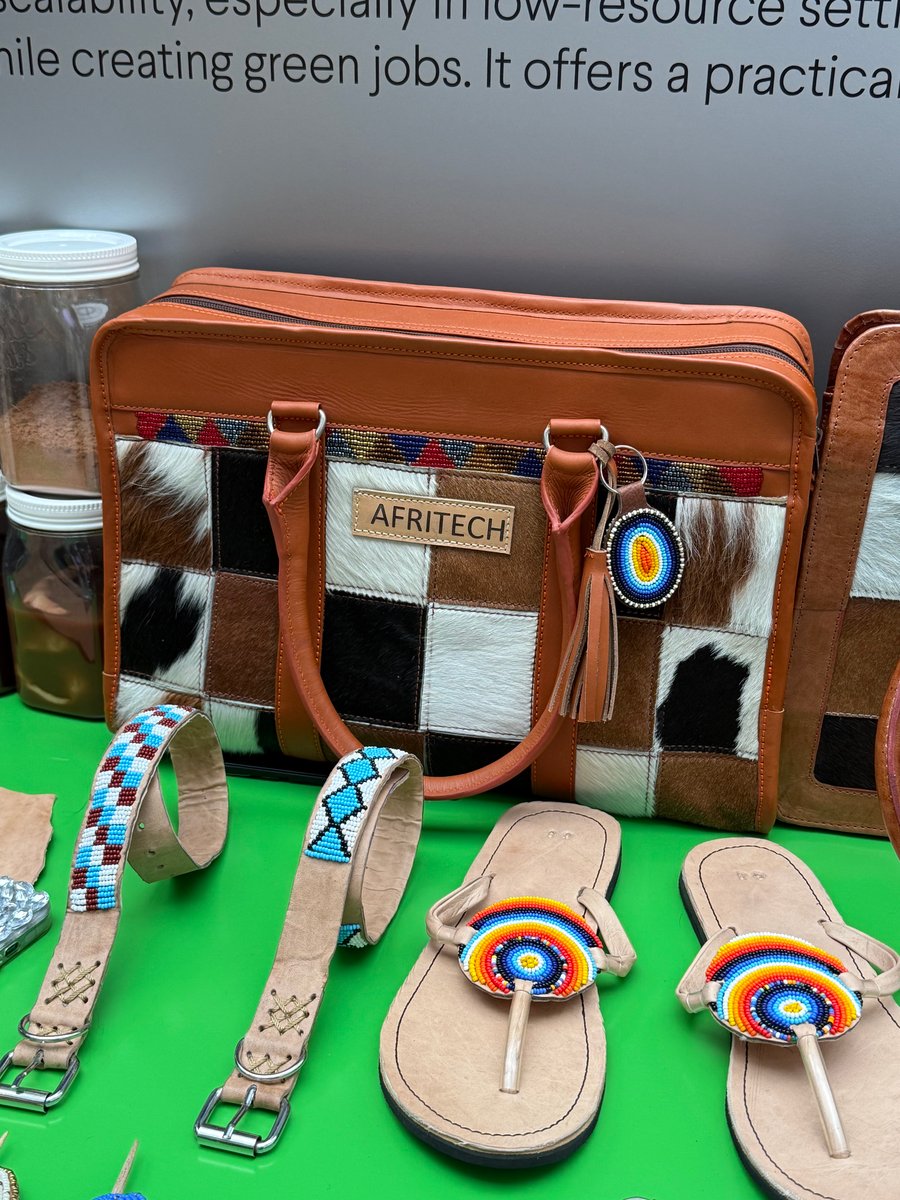
| Bumbling around trying to find the hotel registration here at the Dubai Future Forum (I got dropped off in back, fortuitously at the entrance to the exhibits), I came across the booth of Dr. Cecilia China, CEO of Afritech Organic Leather. Coming from what California counts as ‘futures’, seeing a process innovation was not 100% expected, which is fantastic. Afritech feels like its come from a future leather industry. Instead of the usual chromium-heavy tanning process, they’re using natural tannins pulled from everyday agricultural waste..like cashew husks. Cleaner for the environment, and suddenly those “wastes” become valuable local resources What I love is how they blend
real scientific research with African craftsmanship. They’re not just making eco-friendly tanning agents—they’re turning them into high-quality organic leather and luxury products that actually hold up. It’s the kind of circular, locally powered innovation that helps you imagine into plausible manufacturing futures. | Read more →
|
| |
| Get Sync'd
|
Everyone's shipping. But are we syncing?
Across AI, builders are creating new standards for agents, identity, and payments — sometimes solving problems no one else has seen yet, and other times solving the same ones differently.
This is a community breather — a space to step back, compare notes, and align the patchwork of standards. Read more →
|
| |
| Lending Library
|
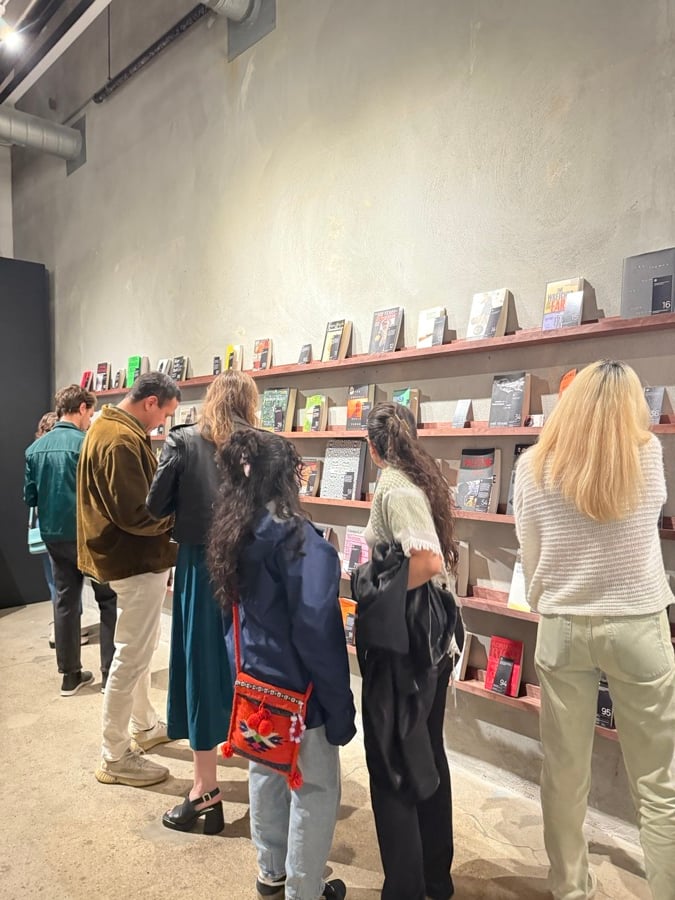 Mitch Jafery's Friday Gallery at The Row
DTLA installs the Mother Tongue lending library and popup bookstore, a weaving together of perspectives on power and language: from the conversations of plants, to the secret lexicon of an extinct female-only language. It will span cultures, eras, and genres: from protest poetry to con artists, from political philosophy to comic books. My own contribution was one of my favorite peculiar books, “The Velvet Monkeywrench” by John Muir with these exquisite hand-drawn illustrations by Peter Aschwanden. And this deserves a short explanation. The first car I ever bought — that beige VW Rabbit — came with a repair manual that had these awesome hand-drawn illustrations. It was a proper repair manual whose idiom was somewhere between Zen and the Art of Motorcycle Maintenance and the meaning of mechanical contrivances. I still have that book. Then there was the ‘73 Toyota Landcruiser, then the Acura Integra, which took me across the country to a summer in Boulder Colorado, working as the fryer operator at the Rio Grande Restaurant. One night, out in the back alley disposing of the spent fryer grease, one of the other guys I would yap with after work — a certified longhair Boulder hippie cat — came over to me, floating
about 1/2 a centimeter off the ground and, with a reverential gesture, handed me this book and said, “this is the manual I was talking about.” And then he glided away into the kitchen. I immediately recognized the same illustration style as that peculiar repair manual I had from my old VW Rabbit. Peter Aschwanden. The book is a trip. Get the original; do not bother with the reprint — every once and again they pop up on Ebay or Abe Books. Go Visit →
| |
| |
| Parkour in the 1930s? This pseudonymously authored book (“Whipplesnaith”) describes this secret group, led by the
mysterious ‘Butterfly Catcher’, as they scale the Cambridge University buildings in the darkest hours. (I'm still not sure if this is an elaborate fiction or historically accurate!) Shawn Chiki pulled this off his wall while I was at Liam Young's studio at SCI-Arc doing a marathon of deeply engaging one-on-one's with the students. Shawn's portfolio and thesis work encompasses virtual, scale, and otherly dimensioned structures that look imminently climbable, so it's no wonder that he'd have this historical reflection on humans clambering.
Read more →
| |
| |
| From the Discord
| From
the 📖-books Channel DEPARTMENT OF Avant-Garde Typography | shared by
Drew Wiberg 246/3383 Piet Zwart is a Dutch designer known for his innovative approach to typography and design. As part of the “Neue Grafik/New Graphic Design/Graphisme actuel Facsimiles” collection, his work is available through the Letterform Archive. The book — “NKF: Piet Zwart’s Avant-Garde Catalog for Standard Cables, 1927–1928”
— features a facsimile reprint of an original issue highlighting Zwart's work, accompanied by an introduction that situates his contributions within the broader context of twentieth-century graphic design history. Read On →
| |
| From the eh-what?? Channel DEPARTMENT OF Read | shared by Rick Griffith Windstar blends psychology and sound to help you
rewrite your mental script. Their Solutions Seminar uses music, guided audio, and a unique video brochure to help you break free from old patterns and unlock your potential.Change your story, change your life—Windstar’s Solutions Seminar mixes music, memory, and a dash of 80s flair to help you take charge of your future.
What the..? →
| |
| From the ai-for-powerpoint?
Channel DEPARTMENT OF We Never Wanted To Make Them Anyway | shared by mtait I worked at a branding agency in NYC once. Not for very long. Culture clash. I'll never forget the one guy who sat over there with a few contrivances to bind and cobble presentation and PowerPoint pitch decks for 'leave behinds'. No one else could mess with his kit. He'd totally mad dog any one who came around. He was king of his somewhat sad little castle.
Presentation startup Gamma just raised $68 million at a $2.1 billion valuation, boasting 70 million users, profitability, and a lean 52-person team. The company is taking on PowerPoint and Google Slides with AI-powered, instant presentations. Gamma is shaking up the presentation world, turning text into slick slides with AI and racking up millions of users—all while staying lean, profitable, and ambitious enough to take on the industry’s biggest names. $ Read On →
| |
| From the ai-apocolypse
Channel DEPARTMENT OF Stay On The Rails | shared by ian AI is hurtling forward, but the money to keep it from going off the rails is barely a blip. Stanford’s Charles Jones says we should be spending billions more to keep humanity safe—because the stakes couldn’t be higher. $ Read On →
| |
| From the 🚦signals-and-inspirations Channel DEPARTMENT OF Take Cover | shared by Mateusz 39/513 According to a report from Android Authority, Google Maps is developing a feature that enables users to select routes with increased shade, thereby allowing pedestrians to avoid sunnier, potentially hotter paths. This
initiative appears to be a response to rising concerns about heat exposure linked to global warming. Find Shade →
| |
| From the dogma95-for-writing
Channel DEPARTMENT OF Read | shared by manualentry GenAI may be powerful, but writing studies has its own principles. Found this quickstart guide for educators who want to say ‘no’ to generative AI—not out of fear, but out of respect for the messy, diverse, and meaningful practice of writing. This guide champions a thoughtful, disciplined refusal of generative AI in writing studies, grounded in the belief that writing is more than efficiency and to think of
it as such could possibly lead to its homogenization. Read The Guide →
| |
| |
| Not Slop
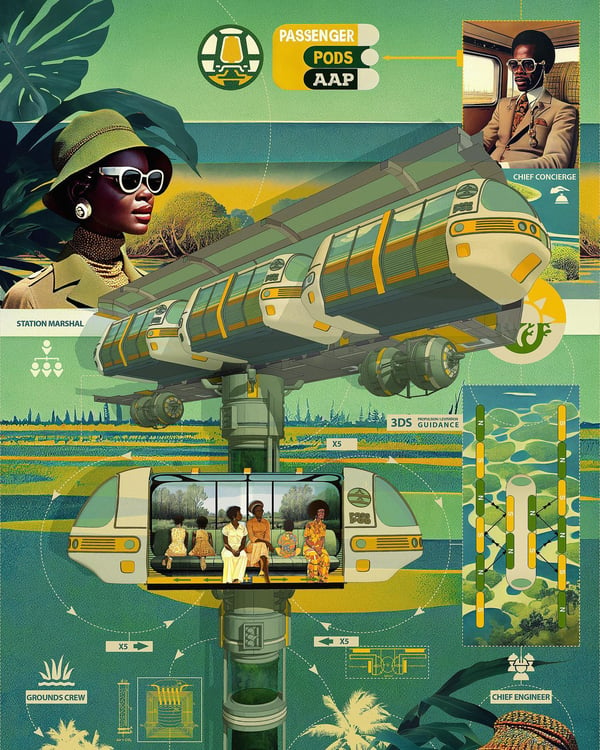
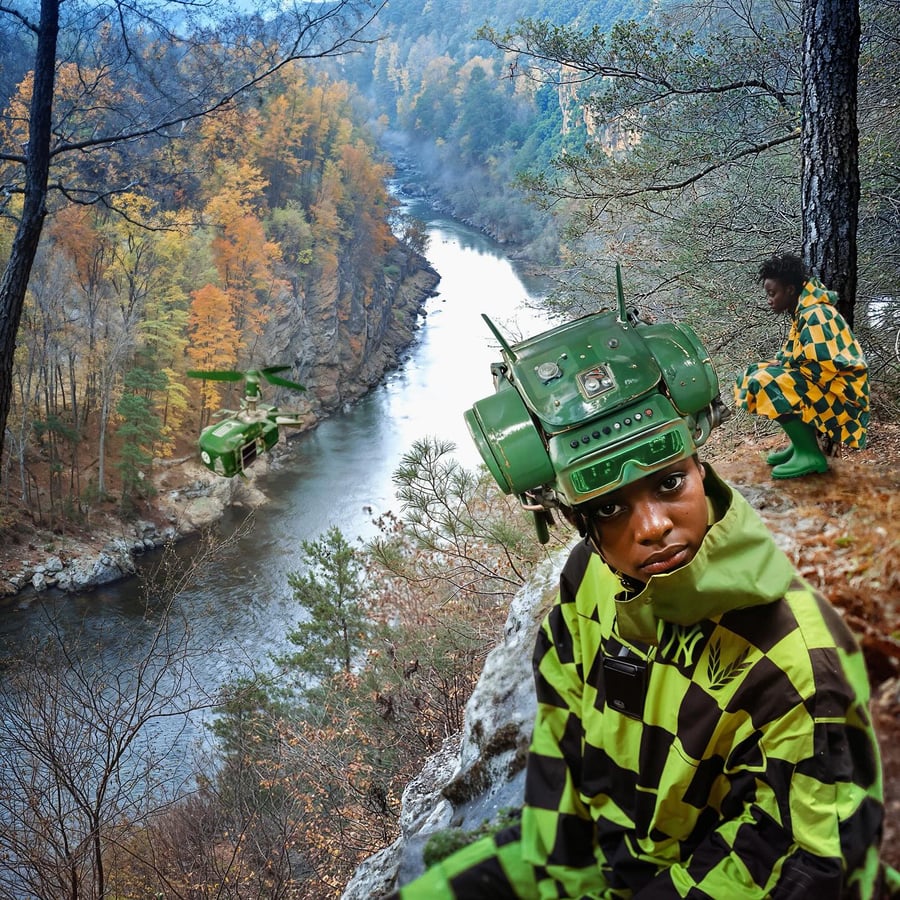
| Olalekan B. Jeyifous is an extraordinary creative whose practice crosses across and between architecture, public art, immersive installation, and speculative visual culture—making. What I enjoy in particular with his work is the way he is able to integrate generative imaging techniques, tools, and practices that are meaning-making first, and technique second. This is most certainly not “AI Slop”. | 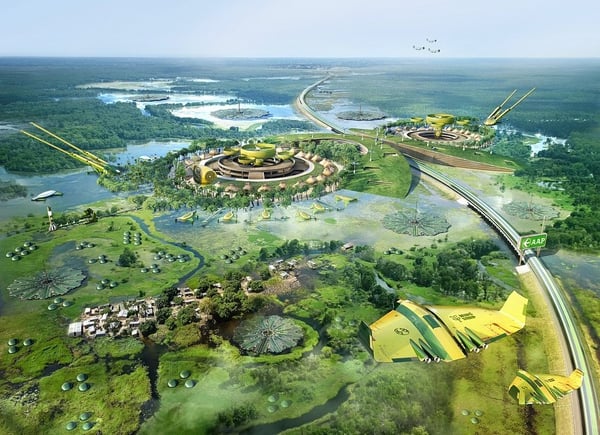
| |
| 
| |
| 
| |
| |
|
|
| Near Future Laboratory Patreon Join the Discord, Support Office Hours,
the Newsletter and More
| 
| The Near Future Laboratory is supported by its community and members. Join us on Patreon to support our work, get access to exclusive content, and be part of our vibrant Discord community where we discuss design, technology, creativity, the future and do projects and support each others' work. I host weekly Office Hours for Patrons — now for 285 weeks and running — every Friday at 0900 (UTC-7 / California). It's a great way to connect, ask questions, and get
feedback on your projects. Each week two people from the community present a project, idea, or challenge and we discuss it together. It's a
great way to get feedback, learn from others, and connect with like-minded people. All of this is done in a friendly, supportive, and
welcoming environment. We have people from all over the world, from all walks of life, and with all kinds of interests. It's a great way to meet new people, network, show what you can do, and learn from each other. In this time of rapid change and uncertainty, it's more important than ever to have a community of people who can support you, challenge you, and help you grow. The Near Future Laboratory is that community. | Join Us →
|
| |
| |
|
|
|
|