We often think of the future as something that just happens to us. We wait for it to arrive, hoping we’ll be ready when it does. But what if we could make the future ourselves? What if we could create artifacts that make possible futures tangible, something you can see, touch, and use?
Ten years ago, I was building OMATA, the product design company and studio I ran out of my backyard. The product I made — a cycling computer with an analog display — was often described as unusual and to some it was even seen as laughably absurd. (I remember one guy saying that he wouldn’t touch it with a 10 foot pole, whatever that means.)
But the point was not quirkiness. The point was that it carried within it a world where such an object felt completely natural. Not as novelty, nor as provocation. Just a straightforward piece of equipment from a possible present — “or adjacent now” — that hadn’t quite happened yet.
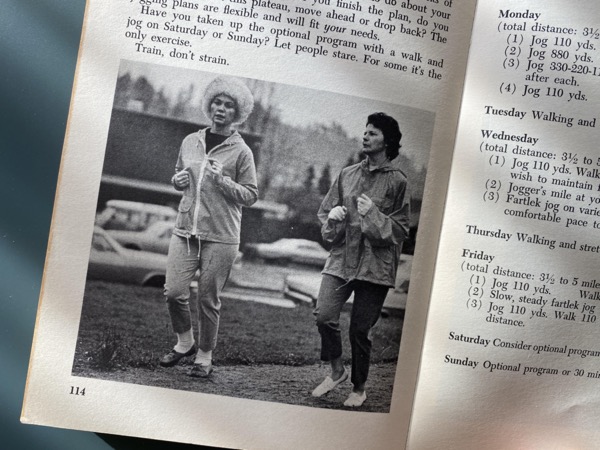
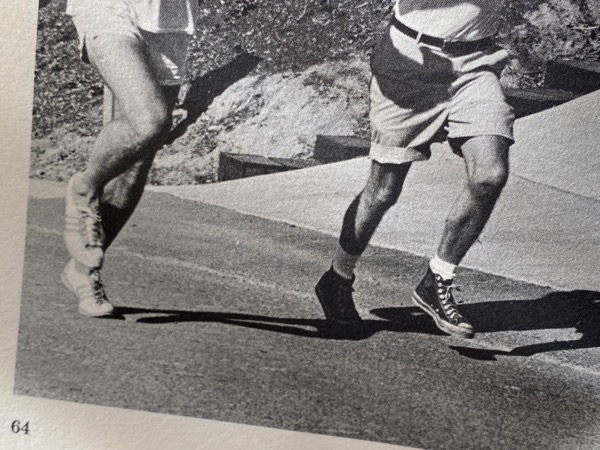
Vastly different context and scale, but I’ll mention this: I keep a copy of the first edition of Bill Bowerman’s book “Jogging” on the shelf next to my studio desk.
The book itself showed a world of people running about in such a way that it’s just something people do. But imagine this: in 1967 when the book came out, there was no such thing as “jogging.” There were no jogging clubs. No costumes to wear (as you can see in the book — women running in their housecoats and clear plastic rain coats; a guy running in Chuck Taylors and a heavy leather belt with a metal belt buckle).
You’ve heard the lore — Bowerman was famously prototyping this world in which people jogging was about as weird as breakfast bacon, doing it all by making his own running shoes by hand.
The book Bowerman wrote — with the disarmingly simple title “Jogging” (which meant nothing back in 1967!) — was his way of making that future tangible. The book is like an artifact from a world that didn’t yet exist, but that he was bringing into being by force of his imagination and the act of making.
That’s the role artifacts can play: they make visible a world in which they belong. They allow people to step into a different register of possibility, even if only for a moment.
And this is the kind of practice organizations need now. We do not need more slide decks. We do not need more reports. Certainly no more sterile personas. And no more books about the future.
What we need now are artifacts — ‘functional fictions’ as I like to refer to them. Tangible probes built quickly, in two-week or four-week sprints, to make possible futures something you can see, touch, or use.
These aren’t predictions. They’re not market-ready products. They’re deliberately partial, sometimes rough, but real enough to start conversations and expose assumptions. They’re fragments from an archaeological dig, pieces of evidence from worlds that might be. And when taken together, those fragments begin to outline a terrain leaders can navigate.
Most importantly this practice that you are probably missing but desperately need allows you and your organization to learn hands-on, while the field is still vast and unexplored.
I’ve seen what happens when that kind of practice is missing — and also what Dawinian tragedy can unfold when it’s not. (I spent 8 years at Nokia — starting the year the iPhone came out..so I can say with some insider perspective that I’ve seen what happens when the business consciousness trips over itself with too much imagination-constraining structure, and a lack of willingness to experiment.)
This is where many organizations find themselves today with AI. Roadmaps are compressing. Categories are shifting before they’re even established. The old playbooks are running out. Efficiency won’t help you here. What’s needed is a capacity to explore — to send small, expeditionary teams out into this new terrain with the mandate to build functional fictions and bring back what they find.
I’ll remind you again: ‘AI in a box’ is a good example to remind us that the work of your expeditionary futures design team is to help you make sense from the other side of ‘now’ — not what makes sense based on our old assumptions of behaviors, norms, rituals, desires.
So here’s my advice: invest in your team’s imagination. Imagination, as I like to say, is evolutionary advantage.
Build a space for engineered speculation and rapid prototyping. Use functional fictions not as finished answers but as conversation starters that pull strategy forward. The organizations that do this won’t just be prepared for the next shift. They’ll be the ones defining it.
Are you in an organization that needs this kind of practice?