Near Future Laboratory Blog
Thoughts, Reflections, Updates & Week Notes
Jul 19, 2006 – Aug 21, 2006
w29/w31/w33/w34/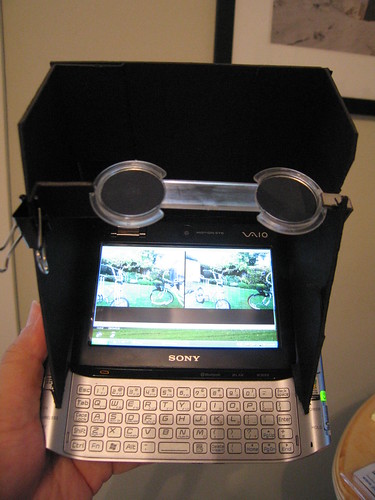
Aug 21, 2006
I spent a week or so wrangling some variations on the immersive viewer apparatus for the little research group at USC working on this project. Some of the “early” prototyping of the concept I had done last winter, described in this blog post.
Book StuffDesign Art TechnologyDisplayDisruptionHardwareInteraction TermsInterfaceMobileNew Interaction RitualsPost-GUIViewmaster of the FutureVisualTheory Objectuser interface
Aug 13, 2006
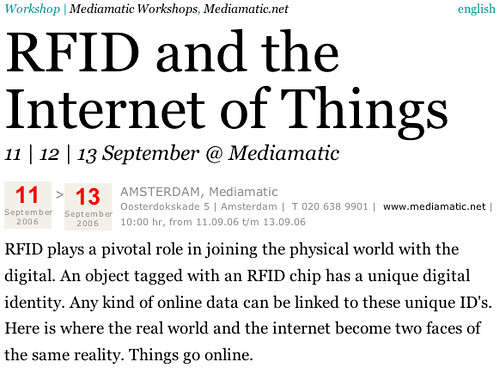
Timo Arnall, Arie Altena and I will be participating in the Mediamatic workshop on RFID & The Internet of Things, September 11-13. It’ll be a mix of discussion, lectures and hands-on prototyping. Should be lots of fun!
General
Aug 04, 2006
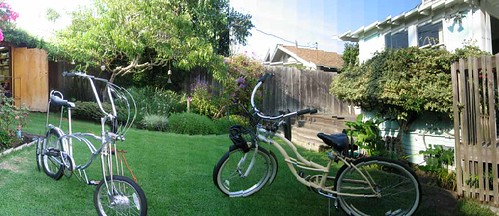
The back story of the project tracks back to a conversation with Naimark. Working on the (wrong) impression that a stereo panorama could be created trivially, using two cameras on a rotating, panoramic rig, I was all set to make stereo QuicktimeVRs. Naimark pointed me to a research paper that indicated that such a c…
DesignDisplayInnovationNew Interaction RitualsPost-GUIProjectsViewmaster of the FutureVisualExperimentOmnistereoQuicktimeVRStereoViewmaster
Aug 03, 2006
In the general category of breeching the berm between 1st Life & 2nd Life — you know, finding ways in which activities in the normal geophysical world can be linked to those in the digitally networked world, I’ve pulled together some thinking into a project that I’m calling Flavonoid. The general idea is to creat…
Book StuffFlavonoidMotion
Aug 03, 2006
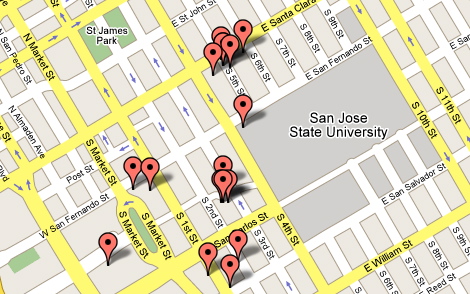
Will just created a Geotagthings feed for ISEA 2006, thank goodness. This’ll definitely help with figuring out what’s where..
Uncategorized
Aug 03, 2006
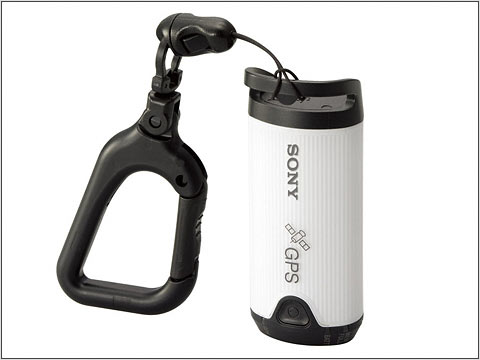
Vince’s post pointed out that Digital Photography Review has release notes on this Sony dangly thing that uses GPS to record your location and precise time at that location. When you get home and want to correlate location with your photos, it’s a simple matter of time-synchronizing with the time stamp embedded in t…
HardwareHow ToTheory Object

Jul 31, 2006
Holly Willis wrote a short profile on me in the July/August 2006 issue of RES Magazine.
General

Jul 20, 2006
ACE2006 Keynote: The Military Industrial Light and Magic Complex
military industrial light and magic complexmixed realitypervasive electronic gamesplaysimulationBook Stuffwriting
Jul 19, 2006
MOBILE ASIA COMPETITION 2006:
Art Center Nabiart technologymobileUncategorized